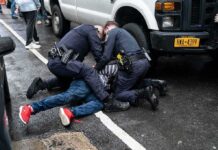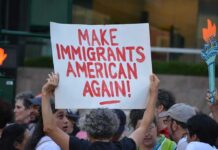

Federal appeals judges just unleashed ICE agents in Minneapolis, stripping away court-ordered handcuffs on arrests and force against protesters—will chaos erupt next?
Story Snapshot
- 8th Circuit Court of Appeals on January 27, 2026, fully stayed a lower court’s injunction, freeing ICE from restrictions during enforcement ops.
- Operation Metro Surge deploys 3,000 agents in sanctuary city Minneapolis amid deadly shooting and child detention sparking massive protests.
- Trump administration hails victory over “liberal judges,” while ACLU warns of impunity for federal agents.
- Tensions boil with state seeking to halt sweeps, highlighting clash between immigration enforcement and protest rights.
Timeline of Escalating Confrontations
ICE officer Jonathan Ross shot and killed U.S. citizen Renee Good on January 7, 2026, during an enforcement operation in Minneapolis. Authorities neither suspended nor charged Ross, fueling outrage in the sanctuary city. Protests surged as the Trump administration ramped up Operation Metro Surge, deploying thousands of agents to target undocumented immigrants. Local police refused cooperation, setting the stage for federal-local friction. This incident ignited community fury against aggressive tactics.
Lower Court Blocks ICE Tactics
U.S. District Judge Kate Menendez issued a preliminary injunction on January 16, 2026. She ruled protesters likely succeeded on First and Fourth Amendment claims. The order barred ICE from arresting, detaining, pepper-spraying, or retaliating against observers without probable cause. Six protesters sued DHS and ICE over alleged violations during Metro Surge operations. Menendez’s decision aimed to protect peaceful assembly and documentation of government actions amid rising tensions.
Child Detention Ignites Fury
On January 23, 2026, ICE detained five-year-old Liam Conejo Ramos during a Minneapolis operation. His father fled, prompting agents to hold the child for safety, per Vice President JD Vance. Thousands protested in subzero temperatures, with four more children detained from local schools. Minneapolis Mayor Jacob Frey decried the sweeps as an “occupation.” Democratic voices like Congressman Joaquin Castro and ex-VP Kamala Harris condemned the actions as cruel, amplifying national debate.
Appeals Court Delivers Decisive Victory
The 8th Circuit Court of Appeals granted a full stay on January 27, 2026, overturning Menendez’s injunction. A three-judge panel reviewed videos showing protesters’ mixed conduct—some peaceful, much not—and agents’ varied responses. Attorney General Pam Bondi blasted the lower ruling as “reckless,” crediting the stay with preventing judges from handcuffing law enforcement. This restores ICE’s operational flexibility in facing obstructions during deportations.
Stakeholder Clashes and Legal Ripples
Trump’s DOJ and ICE celebrate restored authority to enforce immigration laws without protest interference. ACLU Minnesota calls the ruling “incredibly disappointing,” vowing to defend assembly rights. Minnesota seeks a statewide restraining order against sweeps, with hearings pending. Video evidence swayed the appeals court, justifying force against non-peaceful actors. Common sense aligns with federal supremacy here—law enforcement can’t operate if riots block every arrest.
Short-Term Fallout and Future Precedent
ICE now runs unrestricted ops with 3,000 agents in Minneapolis, escalating tensions and boycott calls. Immigrant families and observers face heightened risks, per ACLU concerns. Long-term, this may set precedent prioritizing enforcement over local protest shields nationwide. Constitutional questions linger for Supreme Court review. Sanctuary policies clash with deportation mandates, underscoring divided America. Facts support administration: chaotic protests don’t trump border security.
Sources:
Trump admin wins court victory freeing ICE agents from Minnesota protest restrictions
US ICE officers detain five-year-old amid immigration crackdown