
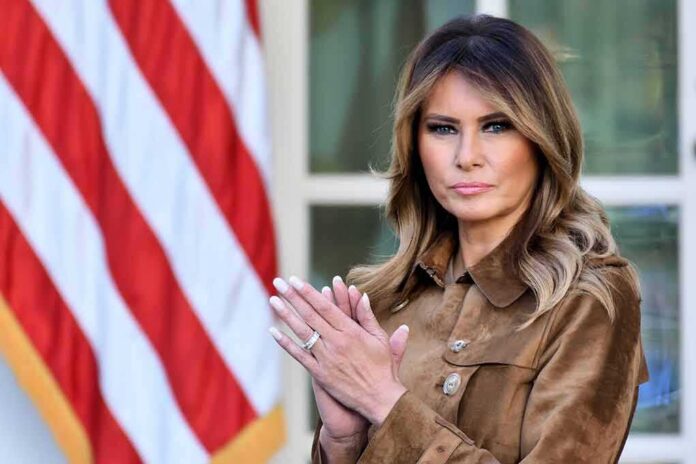
A First Lady rarely breaks her silence to demand a television host be held accountable, but when a comedian’s widow joke collides with a real assassination attempt, the calculus of comedy changes overnight.
Story Snapshot
- Melania Trump publicly condemned Jimmy Kimmel on April 27, 2026, calling his “expectant widow” joke about her “hateful and violent rhetoric” and demanding ABC take action against him.
- Kimmel’s April 24 skit parodying the White House Correspondents’ Dinner aired days before a third assassination attempt on President Trump, intensifying the First Lady’s outrage.
- The incident marks an escalation in the Trump administration’s war with late-night television, with explicit calls for network consequences rather than standard media criticism.
- ABC remained silent as of the statement’s release, leaving uncertain whether the network will reprimand Kimmel or defend the comedian’s First Amendment rights.
When Comedy Timing Becomes a Political Flashpoint
Jimmy Kimmel stood before cameras on April 24, 2026, delivering a parody White House Correspondents’ Dinner speech that would ignite a firestorm. His skit included a jab at Melania Trump, suggesting she possessed the “glow like an expectant widow.” The line landed with audiences as typical late-night fare, sharp and biting in the tradition of political roasts. Three days later, after a weekend that saw yet another assassination attempt on President Trump, the joke transformed from comedy punchline to what the First Lady termed incitement to violence.
Melania Trump’s statement arrived via social media on April 27, uncharacteristically direct and unambiguous. She labeled Kimmel a “coward” hiding behind ABC’s corporate shield, accused him of spreading divisive hatred, and called for the network to take a stand. White House Press Secretary Karoline Leavitt amplified the message during her briefing, describing the joke as “deranged” given she had experienced the assassination attempt alongside Melania on Saturday night. The administration’s coordinated response signaled this was no casual grievance but a calculated escalation in their ongoing media battles.
The Pattern Behind the Outrage
Kimmel’s collision with the Trump orbit is not his first rodeo. In September 2025, Sinclair and Nexstar stations preempted his show after controversial remarks about conservative activist Charlie Kirk’s death, only to reinstate him amid backlash. That episode established a precedent: late-night satire targeting conservatives could trigger network interventions when pressure mounted. President Trump has consistently framed such comedy as biased propaganda, a narrative his base embraces as validation of media hostility. This latest controversy slots neatly into that framework, with the added combustible element of real-world violence.
The White House Correspondents’ Dinner traditionally serves as the arena where journalists and politicians endure comedic roasts, a ritual designed to humanize power through mockery. The 2026 dinner featured mentalist Oz Pearlman instead of a comedian, a departure that prompted Kimmel to stage his own version. His parody included the widow joke alongside other Trump family jibes, standard operating procedure for a host whose ratings depend on politically charged material. Yet timing matters. When the joke aired before an assassination attempt rather than after, its context shifted from satire to what critics frame as foreshadowing or even encouragement.
The Ripple Effects Across Media and Politics
ABC now faces a decision that will define boundaries for political comedy in an era of heightened violence. Defend Kimmel under free speech principles and risk boycotts, advertiser flight, and Trump supporter fury. Discipline or distance from him and invite accusations of caving to authoritarian pressure, potentially chilling satire across the industry. The 2025 preemption episode demonstrated networks will act when economic or political heat intensifies, but that incident lacked the gravity of an assassination backdrop. ABC’s silence as of April 27 suggests internal deliberations over an unprecedented dilemma.
Trump supporters view Melania’s statement as overdue accountability for what they perceive as corrosive left-wing media bias that dehumanizes conservatives and emboldens violence. Late-night comedy fans and free speech advocates counter that jokes, however tasteless, remain protected expression and that conflating satire with incitement sets dangerous precedent. The clash encapsulates America’s broader partisan divide, where even humor becomes a battleground for cultural and political supremacy. Economic impacts loom as well. If ABC disciplines Kimmel, advertisers aligned with progressive causes might withdraw. If ABC ignores the First Lady, conservative advertisers and affiliate stations could retaliate, mirroring 2025’s preemption playbook.
What Happens When the Punchline Lands Too Close
The broader implications extend beyond one comedian and one network. Late-night television has evolved into partisan territory, with hosts like Kimmel serving as de facto opposition voices during Trump presidencies. This incident tests whether that role can survive when jokes intersect with assassination attempts, a scenario that compounds public unease about political violence. If networks begin preemptively censoring material deemed too inflammatory, the chilling effect could sanitize comedy into toothless irrelevance. Conversely, if no boundaries emerge, the risk of actual incitement or normalization of violence against public figures grows.
Melania Trump’s rare public intervention underscores the stakes she perceives. First Ladies typically avoid direct media feuds, maintaining distance from partisan fray to preserve dignity and focus on initiatives. Her willingness to label Kimmel hateful and demand consequences reflects either genuine alarm over violence against her family or strategic amplification of Trump’s media bias narrative, likely both. The assassination attempt’s proximity grants her moral authority critics struggle to dismiss, even as they defend Kimmel’s right to joke. White House Press Secretary Leavitt’s personal testimony of being with Melania during the shooting adds visceral weight, transforming abstract debate into lived trauma.
The Uncertain Road Ahead
As of this writing, ABC has not responded, Kimmel has not apologized, and the story remains fluid. Possible outcomes range from ABC issuing a tepid statement distancing from the joke without punishing Kimmel, to a full-scale firing that reverberates through the entertainment industry. Trump himself has previously called for Kimmel’s termination, and with his administration now holding executive power, informal pressure on ABC’s parent company Disney could materialize through regulatory scrutiny or public attacks. The 2026 midterms loom, offering political incentive for Trump allies to weaponize the controversy as evidence of media depravity, while Democrats may rally around Kimmel as a martyr to authoritarianism.
The widow joke may ultimately be remembered less for its content than its timing, a case study in how context transforms comedy into controversy. Kimmel’s career has weathered Trump criticism before, but this episode carries unique gravity given the assassination attempt and Melania’s direct involvement. Whether ABC stands with its host or capitulates to White House demands will signal how much oxygen remains for political satire in an era where jokes can be reframed as threats and laughter as complicity. One certainty emerges: the line between comedy and incitement has never felt thinner, and neither side shows signs of backing down.
Sources:
Melania Trump blasts Jimmy Kimmel over White House Correspondents’ Dinner parody
Melania Trump calls for Kimmel to be fired over ‘widow’ joke