
The Supreme Court smacked down one tariff strategy, and the White House instantly reached for a different legal lever that had barely been touched—triggering a 24-state lawsuit built around a deceptively nerdy phrase: “balance-of-payments.”
Quick Take
- Oregon Attorney General Dan Rayfield and a coalition of 24 states sued in the U.S. Court of International Trade to block President Trump’s new 15% global tariffs.
- The states argue the administration misused Section 122 of the Trade Act of 1974, which is written for “large and serious” balance-of-payments problems, not ordinary trade deficits.
- The legal fight arrives immediately after a 6–3 Supreme Court ruling that struck down Trump’s earlier IEEPA-based tariffs and opened the door to massive refund claims.
- Consumers and businesses sit in the blast radius because tariffs function like broad consumption taxes that raise prices and scramble supply chains.
A 15% “Temporary” Tariff That Hits Like a Permanent Tax
Oregon’s attorney general Dan Rayfield, joined by 23 other states, filed a fresh challenge after President Trump announced a 15% tariff on most products worldwide. The venue matters: the U.S. Court of International Trade exists for exactly this kind of dispute, where the argument turns on statutory limits rather than campaign slogans. The states describe the tariffs as unlawful taxes that bypass Congress, with the costs landing quickly on families and employers.
The administration’s new move relied on Section 122 of the Trade Act of 1974, a narrow tool that allows up to 15% tariffs for up to 150 days when the nation faces “large and serious balance-of-payments” trouble. The states’ core point sounds technical but carries real consequences: a trade deficit is not automatically a balance-of-payments emergency. That distinction becomes the hinge between a temporary emergency patch and a sweeping economic program by executive order.
The Supreme Court Loss That Set Off the Pivot
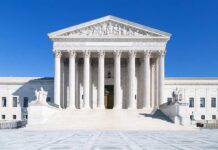
This lawsuit reads like a sequel written under deadline. On February 20, 2026, the Supreme Court ruled 6–3 against Trump’s earlier tariff regime that leaned on IEEPA emergency powers. The decision struck down a central mechanism of the administration’s trade agenda and left importers positioned to seek refunds on huge sums already collected. The immediate pivot to Section 122 looks, to the states, like an attempt to keep the tariff machine running after the Court yanked the keys.
Refunds matter here because they turn “tariffs” from an abstract policy argument into a concrete question of who holds the money. Reports put total collections from the struck-down tariffs in the $150 billion range, and even the dissent flagged uncertainty about how refunds would be administered. Conservative voters tend to dislike bureaucratic limbo for good reason: once Washington collects money, the process of giving it back can become slow, political, and opaque—exactly the kind of administrative mess that invites mistrust.
Section 122: A Narrow Statute Now Asked to Carry a Wide Load
Section 122 was designed as a short-term stabilizer, not a broad rewrite of U.S. trade policy. The states argue Trump used it to address “trade deficits,” while the statute’s trigger focuses on balance-of-payments conditions—language that historically points to a more acute financial crisis, not an ongoing imbalance in goods trade. If courts accept that reframing, presidents gain a ready-made workaround: lose in court under one authority, then relabel the same policy under another.
From a conservative, common-sense perspective, the strongest part of the states’ case is not the rhetoric about affordability; it’s the separation-of-powers claim. Congress writes tax law. Tariffs, whatever the branding, raise revenue and raise prices. If the president can impose broad tariffs by declaring a statutory “condition” that Congress did not clearly define to include trade deficits, then Congress becomes optional on one of the most kitchen-table economic issues there is: what things cost.
Why States Say Consumers Pay, Not Foreign Governments
The coalition’s political pitch is simple: tariffs are taxes that hit Americans first. Economic research cited by the states puts the consumer and business share of tariff costs around 90%, meaning the “punishment” doesn’t magically stay overseas. Prices rise through supply chains, sometimes immediately, sometimes after inventories clear. For older readers who remember inflationary decades, this is the déjà vu nobody asks for—quiet price hikes that show up at the register long before they show up in Washington press briefings.
States also frame the dispute as a budgeting problem, not just a shopping problem. When tariffs raise costs for public projects, infrastructure purchases, and state-contracted services, taxpayers get the bill twice: once through higher consumer prices and again through strained public budgets. Connecticut officials, including Attorney General William Tong and Treasurer Erick Russell, cast the tariffs as destabilizing to planning and affordability. That’s not just partisan talk; it’s how procurement math works.
What the Court of International Trade Could Do Next
Because the case was newly filed, the near-term question is whether the court issues an injunction that pauses the 15% tariffs while litigation proceeds. That procedural decision can matter more than the final ruling, at least for businesses that need to price goods and sign contracts. A pause would reduce immediate uncertainty; a denial could lock in months of costs even if the states ultimately win. Either way, companies importing inputs face a planning nightmare.
Longer-term, the fight forces a decision on what “emergency” means in economic law. If a persistent trade deficit qualifies as the type of crisis Section 122 addresses, presidents gain a powerful shortcut with little congressional involvement. If it does not, Congress remains the proper forum to debate trade-offs: protecting domestic producers, negotiating leverage, inflation risk, and revenue. Conservatives typically prefer that kind of major policy choice to flow through the branch closest to voters.
The Real Cliffhanger: A Tariff Policy That Survives Court Losses
The most revealing detail is the timing. The administration moved to Section 122 shortly after the Supreme Court shut down the prior legal basis. The states call it an end run; the White House presumably sees it as persistence. The unresolved question is whether courts will treat this as a genuinely new legal theory tailored to a statutory purpose, or as the same policy goal wearing different legal clothes. That ruling will shape the next decade of executive economic power.
"Twenty-Four States Led by Oregon File Lawsuit Challenging Trump's Section 122 Tariffs" https://t.co/SqGRbF04Xc
"This may be the first time a lawsuit filed by blue state governments quoted Milton Friedman" 🔥— Scott Lincicome (@scottlincicome) March 5, 2026
For everyone not paid to read statutes, the practical takeaway is blunt: when Washington fights over tariff authority, households and small businesses become the collateral. The lawsuit is not just about Trump, or even about trade; it’s about whether any president can keep reaching for emergency-style tools to impose broad, costly policies without Congress taking a recorded vote. That constitutional friction, more than the 15% number itself, is what keeps this story alive.
Sources:
Attorney General Tong Sues Trump Administration to Stop Latest Round of Illegal Tariffs
US Supreme Court Sides With Oregon AG Dan Rayfield In Trump Tariff Case
Oregon Supreme Court Trump Tariffs 670m Refunds
Supreme Court strikes down Trump’s sweeping tariffs, upending central plank of economic agenda
The State AG Whose Lawsuit Brought Down Trump’s Tariffs