

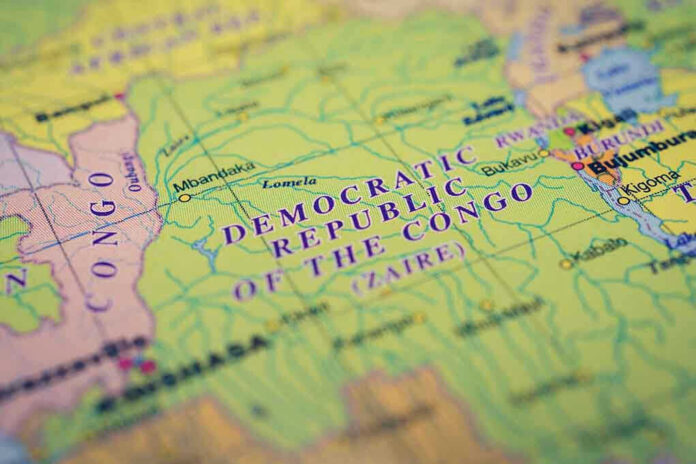
Islamic State terrorists slaughtered 89 innocent civilians in the Democratic Republic of Congo, including 71 people brutally murdered while attending a funeral, marking one of the deadliest ISIS affiliate attacks in Africa this year.
Story Snapshot
- ISIS-affiliated Allied Democratic Forces killed 71 people at a funeral in Nyoto and 18 more in Beni
- The September 2025 massacres represent escalating Islamic State expansion across Africa
- Military pressure has scattered ADF terrorists into smaller, more unpredictable killing units
- Joint Congolese-Ugandan operations continue but have failed to eliminate the growing threat
Islamic State Affiliate Claims Responsibility for Mass Killings
The Allied Democratic Forces, operating as the Islamic State’s Central Africa Province, claimed responsibility for two coordinated attacks in North Kivu province. The first massacre occurred Monday, September 15, 2025, targeting mourners at a funeral in Nyoto village, killing 71 civilians. The following day, terrorists struck again in Beni, murdering 18 additional victims. These attacks demonstrate the group’s deliberate strategy of targeting vulnerable civilian gatherings to maximize psychological terror and media impact.
Terror Group’s Evolution Under Islamic State Banner
The ADF originated in the 1990s as a Ugandan Islamist rebel group before relocating to eastern Democratic Republic of Congo. In 2019, the organization pledged allegiance to the Islamic State, transforming into IS-CAP and dramatically escalating its operational capacity. This alliance provided the ADF with enhanced propaganda networks, tactical guidance, and ideological motivation, enabling more sophisticated and deadly attacks against civilian populations throughout the region.
Military Operations Fail to Contain Spreading Threat
Joint Congolese-Ugandan military operations since 2021 have destroyed several ADF bases and released hostages but failed to eliminate the terrorist network. Crisis Group analyst Onesphore Sematumba noted that military pressure has dispersed the ADF into smaller, scattered units, making attacks more unpredictable and “murderous.” This fragmentation has actually increased the threat to civilian populations, as smaller cells operate with greater mobility and less detection risk.
Islamic State’s African Expansion Accelerates
The Democratic Republic of Congo attacks occur within a broader pattern of Islamic State expansion across Africa, where IS affiliates conducted 86 attacks in June 2025 alone. The International Centre for Counter-Terrorism reports that IS’s fastest growth is occurring in Africa, driven by local grievances, weak governance, and reduced Western military support. Congressional Research Service analysis confirms that African affiliates now play a crucial role in IS’s global resurgence after territorial losses in the Middle East.
North Kivu province remains particularly vulnerable due to persistent instability, porous borders, ethnic tensions, and limited state presence. The region’s poverty and displacement create fertile conditions for terrorist recruitment and radicalization. Local government and humanitarian agencies face overwhelming demands while operating under constant security threats, hampering effective response to the escalating crisis.
Sources:
A Briefer on Islamic State’s Activities Throughout Africa
Death toll from 2 attacks by Islamic State-affiliated rebels in eastern Congo rises to 89
Islamic State 2025: Evolving Threat Facing Waning Global Response
The Islamic State: Organizational Structure and Territorial Losses