

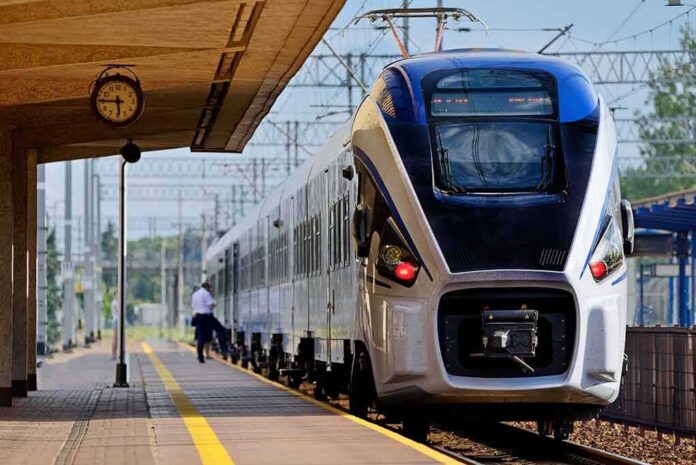
The Bedford train crash was over in seconds, but it exposed a safety system most people assume is fail‑proof.
Story Snapshot
- Two London‑bound commuter trains collided near Bedford, killing the driver and injuring 89 people.
- Passengers described “bloodied faces,” broken legs, and a blast “like a bomb explosion” inside the carriages.
- The crash was rare in a rail network that is statistically one of the safest in Europe.
- The real fight now is over what failed first: steel, software, or the system of responsibility that protects passengers.
How a routine rush-hour trip turned into mass casualty chaos
Friday evening commuters boarded their usual East Midlands Railway services at Corby and Nottingham expecting the same dull trip to London St Pancras they had taken a hundred times before.[1] Both trains ran south toward the capital, packed with office workers, families, and students settling into seats, checking phones, and thinking about dinner. Minutes later, just south of Bedford, one train slammed into the back of the other and turned a normal commute into a major incident.[1]
Police say the driver of the rear train died in the collision, and emergency services treated 89 injured passengers.[1][2] Ambulance teams later broke that number down with unusual precision for a first-day briefing: 11 people with very serious injuries, 22 with serious injuries, and 56 with minor wounds.[1][3] Those figures matter because they show the scale of force inside the carriages. This was not a gentle bump at a red signal. This was a violent stop that threw human bodies around like luggage.
Inside the carriages: dust, screams, and broken bodies
Passengers say the impact came “out of nowhere,” followed by a blast of dust and then wave after wave of screams.[2] One survivor, Peter Knapp, told reporters he saw “faces all bloodied” and people “in a very bad way” after being hurled against seats and tables.[4] Other accounts speak of broken legs, shattered glass, and people struggling to move in cramped aisles while trying to help strangers who could not stand.[2][4] These are not the kinds of injuries you get from a sudden brake; they are blunt-force trauma from a moving vehicle meeting an immovable mass.
Fire crews, police, and paramedics flooded the scene, backed by air ambulances and a hazardous incident team from the East of England Ambulance Service.[2][4] British Transport Police declared a major incident within hours.[3] Trains on one of the nation’s key north–south arteries stopped dead, and passengers on other services were walked along tracks or left at makeshift stops as helicopters circled overhead.[1] For everyone on that stretch of railway, the assumption that “the system always catches mistakes” vanished in a single evening.
How a rare crash fits into a system that is usually very safe
For all the horror in Bedford, this type of crash is now rare in Britain. Long-term analysis of mainline rail across Europe shows fatal train collisions and derailments have dropped by nearly 80 percent since 1990, down to about 0.85 fatal events per billion train‑kilometres by 2019.[21] Rail engineers and regulators like to point out that a typical passenger or crew member would need to make millions of long journeys before facing a serious accident.[19]
Most fatal train‑to‑train collisions that do still happen fall into a small set of failure modes, especially signals passed at danger, where a driver moves past a red signal and into occupied track.[21] Britain brought in layers of protection after ugly crashes in the 1990s, including train protection systems that should stop a train before it reaches danger.[19] When a rear‑end impact like Bedford happens in that context, it raises a simple, hard question: did a human make a mistake the technology did not catch, did the technology fail, or did the system as a whole accept risk it should not have accepted?
What investigators will be forced to untangle next
British Transport Police and the Rail Accident Investigation Branch now have to piece together every second before impact.[5] They will pull data from onboard recorders, cab radios, signal logs, and traffic control screens to reconstruct the exact positions, speeds, and braking patterns of both trains. They will match that technical trail against passenger accounts like Knapp’s timing of the “sudden explosion of mist” and the reported 5:15 p.m. collision window.[2][3]
#BREAKING : Eyewitness Describes Bedford Train Crash as 'Like a Bomb Explosion'
Eyewitness Peter Knapp, who was traveling in the front carriage of one of the trains involved in the collision near Bedford, described the impact as feeling "like I'd been in a bomb explosion." He… pic.twitter.com/S3qfaNd9l0
— upuknews (@upuknews1) June 19, 2026
The key questions are direct. Why were two southbound trains so close together that a collision was possible? Did any signal display the wrong aspect, or did a train pass a red? Did low adhesion on the rails, faulty braking, or software logic in a modern train control system play a role? And once the first impact occurred, did the crashworthiness features of the carriages perform as designed, or did they fail to protect limbs and spines from the worst of the energy?[19]
Why this should matter to anyone who ever trusts a system
Some commentators rush to soothe the public by stressing that rail accidents are rare and that driving is more dangerous.[20] That is statistically accurate and yet misses the point. Modern rail travel is sold as a system where individual human error is fenced in by layers of engineering and procedure. When a rear‑end commuter crash kills one worker and injures 89 taxpayers on a clear day near Bedford, that feels less like random bad luck and more like a warning light on the dashboard of the state.
From a common‑sense, small‑c conservative view, this is not a call for more emotion or more slogans. It is a call for hard facts, honest fault‑finding, and accountability that runs higher than whichever driver was unlucky enough to be in the cab that day. Families of the dead driver and the injured passengers deserve a clear chain of responsibility, not a fog of “lessons learned” slides. Once investigators show what failed in Bedford, the real test will be whether leaders fix it before the next train full of ordinary people trusts the system again.[5][21]
Sources:
[1] YouTube – Passengers recount UK train crash which killed one, injured dozens
[2] Web – Bedford train crash latest: Nine people in critical condition after …
[3] Web – Bedford Train Accident: Lot Of People Had Broken Legs – NDTV
[4] Web – Two Passenger Trains in Deadly Collision in Britain – ny times
[5] YouTube – ‘A number of people injured’ in train collision near Bedford
[19] Web – Mind the gap: 11 years of train-related injuries at the Royal London …
[20] Web – Crashworthiness – Rail Engineer
[21] Web – How common are train crashes in Wales? – BBC
© ournationnews.com 2026. All rights reserved.