The most dangerous part of a missile strike isn’t always the blast—it’s what the blast wakes up inside an industrial site.
Quick Take
- The research premise claims an Iranian missile hit an Israeli factory with a possible hazardous-material leak, but the provided mainstream citations don’t document that specific incident.
- Several English-language videos and social posts amplify the “industrial hit/chemical leak feared” narrative, yet independent, official confirmation is not present in the listed citations.
- What the citations do support: Iran’s April 2024 mass attack on Israel caused limited damage, and Israel has conducted strikes on Iranian missile-related facilities.
- Industrial targets change the risk profile fast: smoke plumes, secondary fires, toxic releases, evacuation decisions, and misinformation all compete in the first hour.
When “Hazardous Leak Feared” Becomes the Headline, Verification Becomes the Story
Claims of an Iranian missile striking an Israeli factory and triggering a potential hazardous-material leak spread quickly because they hit a primal nerve: invisible danger. The problem in the provided research is simple and serious: the citations supplied do not describe or confirm that specific Israeli factory incident. They instead point to other, adjacent realities—Iran’s April 2024 strike package against Israel and Israeli strikes against Iranian military-industrial sites.
This gap matters because “industrial site hit” is not a minor detail; it’s the whole risk. A warhead in an open field is one thing. A warhead near solvents, chlorine compounds, fuel tanks, pesticides, or specialty gases is a different kind of emergency, with different playbooks and different incentives for bad actors online. Without solid sourcing, the best readers can do is separate what’s provable from what’s viral.
What the Provided Citations Actually Establish About Iran–Israel Strikes
The citations paint a recognizable picture of the broader conflict environment while leaving the alleged factory-leak episode unverified. Wikipedia’s summary of the April 2024 Iranian strikes on Israel describes a large, coordinated barrage involving drones and missiles and reports limited damage. Other provided links discuss Israeli actions against Iranian targets, including reporting about strikes that damaged an Iranian ballistic missile factory and assessments of Iranian activity and regional escalation dynamics.
That context doesn’t prove the factory claim, but it explains why such a claim would travel well. People know the region has absorbed missile attacks, air defenses intercept most threats, and the occasional impact can still create frightening localized scenes. Online publishers then fill the vacuum with dramatic framing—“chemical plant,” “industrial zone,” “hazardous leak feared”—because it keeps viewers watching. The conservative, common-sense approach is to demand specifics: which facility, which chemical, which authority confirmed it, and what measurable impact followed.
Industrial Strikes Create Two Crises at Once: Fire Control and Information Control
A suspected hazardous release forces emergency managers into a time-pressure trap. They must decide whether to shelter-in-place or evacuate before they know exactly what’s burning. Responders look for telltale cues: color and behavior of smoke, wind direction, burning odors, reports of eye or throat irritation, and whether on-site sprinklers and containment systems still function. A modern industrial park often has safety data sheets and sensors, but explosions can knock out power, communications, and monitoring gear.
Information control becomes the second crisis because panic spreads faster than particulates. Local authorities may withhold details to prevent stampedes or because they genuinely don’t know yet. That silence creates the perfect opening for activists, propagandists, and click-driven accounts to “confirm” what hasn’t been confirmed. Americans who lived through post-9/11 threat messaging recognize this pattern: vague warnings, recycled footage, and confident captions. The right move is not cynicism; it’s disciplined skepticism until primary confirmation arrives.
The Tell: Videos Show “Impact” Easily, but Rarely Prove “Leak”
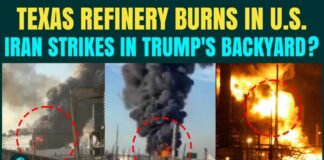
Video can validate that something happened—an explosion, a fireball, a shockwave—but it rarely proves what escaped into the air. Most viewers can’t distinguish a petroleum fire from a chemical release by sight alone, and bad-faith posters exploit that. They pair unrelated footage with current headlines, clip out timestamps, or reuse old industrial accidents. Even when footage is current, “hazardous” might mean ordinary combustion byproducts rather than a unique toxic plume requiring mass evacuation.
Conservative readers tend to trust their eyes, and that’s usually a strength. Here, it can be a vulnerability. Eyes confirm fire; instruments confirm exposure. The quickest credibility test is whether the report includes operational details: measured concentrations, perimeter cordons, hospital intake data, specific product names, or statements from fire services and environmental agencies. In the material provided, the citations list doesn’t supply those elements for the alleged Israeli factory incident, leaving viewers with heat and speculation rather than verified hazard data.
Why This Narrative Still Matters Even If the Specific Claim Stays Unproven
The underlying vulnerability is real: concentrated industry near population centers becomes an attractive target when enemies want disruption more than territory. Striking a plant can multiply fear, jam roads, strain hospitals, and force leaders into public decisions under uncertainty. The United States understands this logic because chemical spills and refinery fires—without any missiles—already create chaos. Add wartime propaganda and you get a perfect storm of rumor, fear, and political leverage.
American common sense also recognizes incentives. Iran and its proxies benefit when Israelis feel unsafe at work and at home; Israel benefits when it can show resilience and control. Online influencers benefit either way because outrage pays. The safest conclusion from the provided research is narrow: the broader conflict environment is documented, but the specific “Israeli factory hit causing potential hazardous leak” remains unsubstantiated by the listed citations, even as social media pushes it hard.
https://twitter.com/Fearless45Trump/status/2038378129366946153
Readers who want to stay grounded should treat early “leak feared” language as a prompt to watch for follow-up confirmations, not as a conclusion. Look for official incident updates, environmental measurements, and consistent geolocation across multiple independent outlets. If those never materialize, assume the story was either exaggerated, misidentified, or built on incomplete initial reports—an all-too-common outcome when war, industry, and social media collide.
Sources:
IDF strikes ‘critical’ Iranian ballistic missile manufacturing sites in Tehran