ournationnews.com — A weapon buried since World War II sat silent under an Indonesian fishing village for eight decades—then, on a quiet Sunday afternoon, it finally woke up.
Story Snapshot
- A suspected World War II bomb exploded under a stilt house in Papua, killing five and injuring around 19.
- Nine nearby homes were destroyed, forcing dozens of residents to flee to temporary shelters.[1][6]
- Police strongly suspect leftover wartime ordnance but admit the investigation is still underway.[1][6]
- The blast exposes how unfinished business from the 1940s still kills civilians in the Pacific today.[3][6]
A quiet fishing village, a buried weapon, and seconds of chaos
Residents in a coastal settlement in Biak Numfor, Papua, went about a normal Sunday when a thunderous blast ripped through a cluster of stilt houses, sending a ball of fire and thick smoke into the sky.[1][6] The explosion came from beneath a fisherman’s home built on stilts above the ground, instantly killing five people and injuring about 19 others, many from the same extended family.[1][6] Within seconds, ordinary domestic life turned into a war scene no one living there had actually seen.
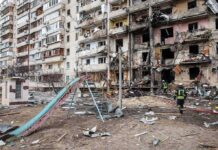
The blast did not just claim lives; it erased part of the neighborhood. Reports describe six to nine houses either destroyed or rendered unlivable, their wooden frames shattered and roofs torn away.[1][3] Survivors stumbled out burned, cut, and stunned, while at least three people were initially listed as missing.[1][5] Local authorities rushed to cordon off the area, fearing additional unexploded munitions might still lurk under nearby homes or pathways.[5] For dozens, the blast meant instant homelessness and an uncertain future.
What authorities know, what they suspect, and what they do not
Papua police say the explosion is “strongly suspected” to have been caused by a bomb or mortar left over from World War II, buried beneath the stilt house until something disturbed it.[1][6] A police spokesman described it specifically as suspected wartime ordnance and promised more details once the investigation and recovery were complete.[1][6] Other officials echoed the same framing, calling it a leftover World War II bomb that finally detonated after decades in the ground.[2][5] Yet even as headlines hardened, the technical facts remained incomplete.
Public reporting still leans heavily on that single word—“suspected.” Wire stories, local broadcasts, and international outlets all repeat the same cautious language: a suspected World War II-era bomb, a shell believed to be from the war, an ordnance thought to date back to the 1940s.[1][2][8] None of the available accounts share bomb-disposal reports, metal fragments analysis, serial markings, or fuse identification that would lock in the exact type, age, or origin of the device. From a common-sense conservative view, that should matter. Facts deserve verification before they become permanent narrative.
The uncomfortable truth about leftover war in the Pacific
The suspicion that this was wartime ordnance is not pulled out of thin air. Papua and the broader Southwest Pacific were saturated with explosives during World War II as Japanese, American, Australian, and Allied forces fought for control of islands and sea lanes.[3] Historical analyses describe ammunition ships blowing apart in harbors, air raids dumping loads into jungles and reefs, and hurried dumps of unused shells as troops rotated home.[3] Much of that metal never left; it simply sank, rusted, or got buried under postwar villages like the one that just exploded.
Modern Papua New Guinea and nearby islands still report people killed when old bombs are plowed up, fished up, or tinkered with by residents who do not realize what they have found.[3][4] The pattern echoes here: one nearby report suggests locals may have tried to open a suspicious object before it detonated, and police reportedly found another unexploded mortar shell close to the blast site.[3] That aligns with a sobering rule of thumb veterans often repeat: unexploded does not mean harmless; it just means “not yet.”
Why this story should change how we think about “old wars”
Many in comfortable Western suburbs treat World War II as a closed chapter—books, films, maybe a museum visit on a slow weekend. For families in Biak Numfor, that “old war” just set their homes on fire.[1][5][6] The people killed on that Sunday never wore a uniform, never saw a battlefield, and yet they died because governments in the 1940s pushed mountains of explosives into fragile environments and never fully cleaned them up. That is not guilt by today’s villagers; that is the cost of strategic decisions made far away, decades ago.
Conservative common sense says personal responsibility matters, but so does learning from hard experience. This blast is a reminder that when nations wage industrial-scale war, the bill does not arrive only at victory parades or peace conferences. It arrives later—in villages where children play near corroded shells, where fishermen dig post holes into old blast craters, where an ordinary Sunday afternoon can turn into a disaster zone in less than a second.[1][3][5][6] Old conflicts may fade from memory, but their debris still enforces its own brutal terms.
Sources:
[1] Web – WWII Bomb Suddenly Explodes in Indonesia, Killing Five and Destroying …
[2] Web – Suspected World War II ordnance explodes in Indonesia, five dead
[3] YouTube – WWII-Era Bomb Explodes in Fishing Village, 5 Killed and 19 Injured …
[4] Web – Ammunition Ship Explosions in Papua New Guinea and Solomon …
[5] Web – Three recovering in hospital after lethal WWII bomb blast in PNG’s …
[6] Web – Five killed in suspected WWII shell explosion | The Star
[8] Web – Suspected World War II bomb explodes in Indonesia, killing 5 people
© ournationnews.com 2026. All rights reserved.