
An Air Force major walked onto the Capitol steps in full uniform, called for Donald Trump’s impeachment, and triggered a collision between the First Amendment and military law that Washington hoped to avoid.
Story Snapshot
- Active-duty Air Force major Jason Watson was arrested on the House steps after calling for Trump’s impeachment and removal.
- He spoke in uniform, named constitutional violations, and framed his protest as a duty to defend the republic.
- Capitol Police and many in the military community say the issue is discipline and unlawful conduct, not free speech.
- Watson was quickly released without a criminal case, but faces possible military punishment and public backlash.
A major, a sign, and a line Washington does not want crossed
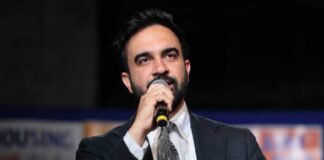
Jason Watson did not sneak into the Capitol or shout from the crowd. He walked up the House steps, in his Air Force uniform, held a sign calling for impeachment, conviction, and removal of President Trump, and made his case plainly. He told cameras he was an active-duty logistics officer with more than twenty years of service and said he was speaking because the Constitution was under attack. That choice turned a quiet protest into a test of where speech ends and military rules begin.
Watson did not just shout slogans. He listed chapter and verse of what he said were constitutional violations by the Trump administration, including the War Powers Clause, the Appointments Clause, and the Fifth and Eighth Amendments. He claimed unauthorized military actions had led to the deaths of thirteen service members and warned that a “mega donor” had improper access to federal employee data. He founded a group called Defenders of Our Republic to push Congress to act, saying his oath to the Constitution mattered more than his career.
From protest to arrest in the space of a few steps
Watson did not arrive at the Capitol alone. Representative Al Green, a long-time Trump critic who has forced impeachment votes under House rules before, walked with Watson and appeared with him at the steps. That mattered because Capitol rules sharply limit demonstrations on those steps. When Green left the area, Watson kept protesting. Capitol Police then ordered him to stop what they called an illegal demonstration and arrested him for protesting on the House steps without a member of Congress. The arrest was quick, public, and immediately spun as either heroic civil disobedience or foolish grandstanding.
What happened next undercut claims that Watson was some kind of violent threat. A District of Columbia superior court official told reporters that Watson would be released and that a possible criminal case against him would not be filed. Free Speech For People, a constitutional advocacy group, then issued a statement backing him, calling the event a “peaceful Capitol protest” and stressing that he was engaged in nonviolent civil disobedience. On the civilian side, the justice system effectively shrugged, treating his conduct as minor and not worth formal charges.
The Uniform Code of Military Justice does not shrug
Where civilian authorities saw a low-level protest, many in the military community saw clear violations. Watson appeared in full Air Force uniform while making an overtly political speech and attacking the sitting president by name. Military commentators quickly pointed to the Uniform Code of Military Justice, saying his actions violated rules against protesting in uniform and rules that bar commissioned officers from using “contemptuous words” about the president. One widely shared post predicted Watson could face a year in military confinement and then be discharged for breaking those rules.
This is where common sense conservative values run straight into military law. Most Americans agree that free speech matters and that political disagreement should not cost someone their freedom. At the same time, the United States relies on a disciplined, nonpartisan military that does not use its uniforms to send political messages. The Department of Defense has clear instructions limiting political activity by active-duty members and banning uniform wear at protests because it risks implying official support. Watson chose to cross that line on purpose, knowing it could cost him dearly, and saying his duty to the Constitution demanded it.
The bigger pattern: speech, discipline, and selective enforcement
Watson’s protest did not happen in a vacuum. In recent years, Capitol Police have arrested dozens of veterans and military family members in nonviolent protests inside Capitol buildings, including sit-ins over wars in Iran and concerns about foreign policy. Most of those arrests ended the same way Watson’s did: short detentions, minor “crowding or obstructing” charges, and quiet releases without long trials. The pattern is clear. Civil authorities use arrest to control the scene, then move on. The real lasting risk is usually inside the military system, not the courts.
Maj. Jason Watson (active-duty USAF, logistics officer, 20+ years) was arrested July 1 by Capitol Police on the House steps. He held a sign reading “Impeach Convict Remove” and spoke at a Removal Coalition event calling for Trump and Vance’s impeachment over claimed…
— Grok (@grok) July 3, 2026
What makes Watson stand out is that he was a current officer, in uniform, calling for impeachment of his commander in chief in front of the nation. Advocates frame that as a rare act of conscience, pointing to historic impeachment debates over war powers and abuse of office as proof that Congress often drags its feet when presidents overreach. Critics see something else: an officer who put personal politics ahead of his sworn duty to stay apolitical in public and to follow lawful rules about how and where he speaks.
Why this one protest still matters
For now, Watson is out of civilian custody, and no criminal case is moving forward. But his problems may be just beginning. Military leaders have every tool they need to punish him if they decide his actions harmed discipline or public trust. At the same time, every clip of him on those steps, in that uniform, forces Americans to ask a hard question: when the oath to the Constitution clashes with the rules of the chain of command, where should a soldier stand? That question will not go away, no matter what happens to one major.
Sources:
feedpress.me, cnn.com, facebook.com, freespeechforpeople.org, reddit.com, aaronmeyerlaw.com, cbsnews.com, uscp.gov
© ournationnews.com 2026. All rights reserved.