Two teenagers from Pennsylvania drove into Manhattan on a March morning, threw homemade bombs into a crowd of protesters outside the mayor’s home, and told police they did it for ISIS—yet they just entered not guilty pleas in federal court.
Story Snapshot
- Emir Balat, 18, and Ibrahim Kayumi, 19, face life sentences on charges including use of weapons of mass destruction after allegedly throwing IEDs at protesters outside Gracie Mansion on March 7, 2026
- The defendants admitted ISIS inspiration to authorities immediately after arrest but pleaded not guilty in Manhattan federal court mid-March 2026
- The attack targeted an anti-Islam rally protesting NYC’s first Muslim mayor, Zohran Mamdani, creating a volatile clash between far-right demonstrators and counter-protesters
- Federal prosecutors charged both men with five counts carrying penalties ranging from 10 years to life imprisonment, backed by surveillance tracking their one-hour journey from bridge entry to arrest
When Ideology Meets Opportunism at the Mayor’s Doorstep
The timeline reads like a terrorist checklist executed with chilling efficiency. License plate readers captured Balat and Kayumi crossing the George Washington Bridge at 11:36 a.m. By 12:05 p.m., they had parked near East 81st Street. Ten minutes later, they ignited and hurled two improvised explosive devices into a crowd gathered outside Gracie Mansion. NYPD officers arrested them on the spot. The entire operation from entry to capture lasted barely an hour, but the implications stretch far beyond that narrow window of violence.
What makes this case particularly troubling is the convergence of three dangerous elements: ISIS-inspired radicalization reaching teenagers in suburban Pennsylvania, the weaponization of legitimate political protests as terror targets, and the willingness of young men to travel interstate with explosives to attack Americans exercising First Amendment rights. U.S. Attorney Jay Clayton emphasized the gravity when he noted the defendants came to New York City specifically to commit terrorism, not simply to protest or counter-protest.
The Charges Reveal the Severity
Federal prosecutors filed five counts against each defendant, and the list tells you everything about how seriously authorities view this incident. Material support to a terrorist organization carries a maximum 20-year sentence. Use of a weapon of mass destruction carries life imprisonment. Transportation and receipt of explosives each bring 10-year maximums, as does possession of destructive devices. These are not symbolic charges meant to send messages—they reflect actual statutes designed for individuals who employ explosive violence in service of foreign terrorist groups on American soil.
The designation of homemade bombs as weapons of mass destruction might sound like prosecutorial overreach to some, but federal law defines WMDs broadly to include any destructive device designed to cause death or serious injury through explosive force. The defendants allegedly built devices, transported them across state lines, and deployed them in a crowded public space. That meets the statutory threshold regardless of whether the bombs actually detonated as intended or caused the mass casualties the perpetrators presumably hoped for.
Why Target This Particular Protest
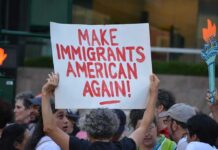
The anti-Islam rally outside Gracie Mansion was organized by far-right activists protesting Mayor Zohran Mamdani, New York City’s first Muslim mayor. Counter-protesters showed up to oppose the demonstration, creating exactly the kind of chaotic environment where explosives cause maximum harm and confusion. For ISIS adherents, the symbolism was likely irresistible: attacking both sides of a heated dispute over Islam in America, near the residence of a Muslim elected official, while sowing terror in the nation’s largest city.
This tactical approach mirrors other ISIS-inspired plots where perpetrators exploit existing social tensions and public gatherings to amplify impact. The 2015 Garland attack targeted a Muhammad cartoon contest. The 2016 Chelsea bombing struck a crowded Manhattan neighborhood during a charity race. These incidents share a pattern of lone actors or small cells leveraging cultural flashpoints to maximize symbolic and psychological damage. Balat and Kayumi allegedly followed that playbook, traveling from Pennsylvania specifically when and where their ideology intersected with opportunity.
The Not Guilty Pleas and What Comes Next
Despite reportedly admitting ISIS inspiration to law enforcement immediately after their arrests, both defendants entered not guilty pleas during their brief Manhattan federal court appearance. This is not unusual or particularly telling—defense attorneys routinely advise clients to plead not guilty at arraignment regardless of statements made to police. It preserves all legal options and forces prosecutors to prove their case beyond reasonable doubt. The real test comes during pre-trial motions and potential plea negotiations as both sides evaluate the strength of the evidence.
That evidence appears substantial. Beyond the defendants’ own admissions, federal authorities executed search warrants at their Pennsylvania residences, likely uncovering bomb-making materials, communications, or other corroborating proof. Surveillance footage and license plate data establish their movements. Witness testimony from protesters and arresting officers will detail the attack itself. The FBI and Joint Terrorism Task Force have built these cases methodically, and the U.S. Attorney’s office doesn’t file WMD charges on weak foundations. These young men face the prospect of spending the rest of their lives in federal prison if convicted.
Broader Implications for Security and Extremism
This incident raises uncomfortable questions about radicalization pathways reaching American teenagers in quiet Pennsylvania suburbs. How did two young men—one barely out of high school—come to embrace ISIS ideology strongly enough to build bombs and drive into New York City intent on terrorism? The answer likely involves online propaganda, since ISIS has long exploited social media and encrypted platforms to recruit distant sympathizers. Law enforcement has disrupted numerous plots hatched in bedrooms and basements by individuals who never physically contacted foreign handlers but absorbed enough extremist content to act independently.
The attack also highlights the growing danger at politically charged protests where multiple factions gather with opposing agendas. A third arrest—Ian McGinnis on state charges for pepper-spraying counter-protesters—demonstrates the broader violence surrounding this event. When far-right activists, counter-protesters, and now ISIS-inspired bombers converge at the same location, public safety becomes extraordinarily complex. NYPD and federal authorities will undoubtedly reassess security protocols for future demonstrations, particularly near sensitive sites like Gracie Mansion. Expect tighter perimeters, enhanced surveillance, and more aggressive screening at protests involving controversial political or religious themes going forward.
Sources:
2 men plead not guilty in alleged Islamic State-inspired bomb attempt – AOL