
A hidden camera inside a Washington dinner turned one White House budget analyst into the latest test of what government loyalty really means in an era of stings and spin.
Story Snapshot
- Undercover footage features Benjamin Elliston, a White House budget analyst, criticizing President Donald Trump, released by James O’Keefe’s media group [5].
- The White House placed Elliston on administrative leave and said he had no direct access to the president or senior staff [4].
- Past O’Keefe stings have led to job losses and lawsuits alleging deceptive editing, shaping public skepticism and institutional caution [2][3].
- The dispute centers on authenticity, context, and whether off-duty opinions equal disloyalty or protected speech [2][3][4][5].
What the hidden camera shows and why it matters
James O’Keefe published undercover video branded “The White House Tapes,” featuring Benjamin Elliston identified as a budget analyst, apparently voicing harsh criticisms of President Trump during a personal conversation captured without his knowledge [5]. The footage arrived packaged as proof of anti-Trump sentiment inside the executive branch, a familiar pitch in O’Keefe’s catalog. The lack of a full verbatim transcript or independent verification of Elliston’s exact words leaves the public dependent on the edited presentation, which heightens both intrigue and doubt [5][1].
Secondary coverage amplified the sting’s framing: White House insiders trashing the president, with headlines implying a broader culture of disloyalty [1][4]. That coverage extended the clip’s reach beyond partisan followers of O’Keefe’s work, translating a private, possibly off-duty conversation into a referendum on institutional integrity. The public response followed predictable grooves: supporters saw confirmation of a “deep state,” and skeptics questioned whether edits and selective context engineered a more damning impression than the raw exchange would warrant [4].
How the White House responded and what it signals
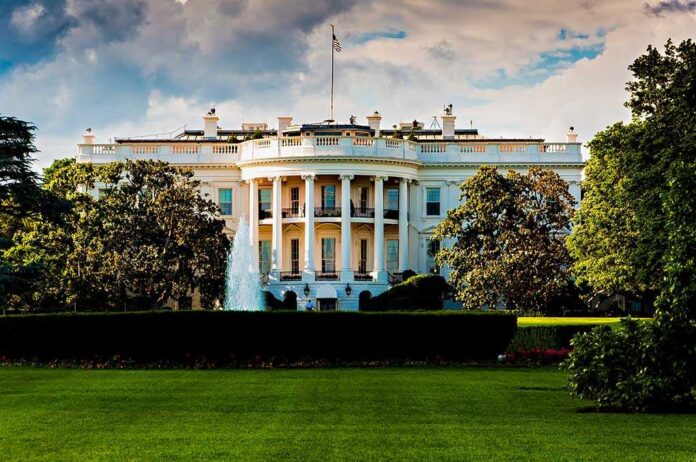
The White House placed Elliston on administrative leave after publication, emphasizing that he lacked direct access to the president or senior staff and that his comments did not represent the administration [4]. That move served two ends: protect operational credibility and buy time for an internal review. Administrative leave, rather than immediate termination, tracks with prior cases where agencies paused to assess both authenticity and context before deciding whether discipline rested on solid grounds under workplace and constitutional rules [4][3].
Maxim Lott, another figure highlighted in coverage of the sting, publicly defended his alignment with the Trump agenda, asserting that nothing he said contradicted administration policy [4]. That defense underscored the line many public employees try to walk: personal opinions versus professional duties. American conservative values typically favor clear chains of command and mission integrity; they also respect due process and the difference between lawful private speech and on-duty insubordination. The White House’s message aimed to reassure on both counts without overcommitting to a still-unfolding evidentiary record [4].
The O’Keefe playbook, legal blowback, and credibility calculus
O’Keefe’s undercover stings have scored viral attention and sometimes triggered personnel actions against federal workers and contractors, reinforcing a perception that hidden cameras expose genuine disloyalty [3]. Parallel cases, however, show the legal and ethical backlash that shadows this method. Former federal employees have sued over secret recordings, alleging defamation, deceptive editing, and violations of wiretap laws, seeking discovery to test what the public rarely sees: raw footage, timestamps, and unspliced audio that could confirm or dismantle edited narratives [2][3].
I bet these “two high level White House insiders” are critics of Trump’s shameless suck up to Netanyahu.
Because James O Keefe is never allowed to send honeytraps with “undercover cameras” to expose how Israel firsters speak of Trump behind his back. https://t.co/HJpG5VmQmv
— Abdi (@BLACKTIVIST5) May 12, 2026
Courts and agencies juggle competing principles: workplace discipline, public trust, and First Amendment protections. Lawsuits by figures like former Federal Bureau of Investigation personnel argue that private commentary, absent demonstrable on-duty misconduct, should not cost livelihoods [2]. Conservative common sense weighs intent and impact: if an employee’s personal talk never crosses into sabotage or policy obstruction, discipline should fit facts, not online fury. Conversely, if private talk reveals planned dereliction, leadership must act decisively to defend the mission. The Elliston case sits squarely in that gray zone until unedited evidence resolves it [2][3][5].
What would settle the dispute and what to watch next
Three items would move this from internet trial to grounded judgment. First, the full, unedited video and audio with clear timestamps to evaluate continuity, prompting, and selective splicing claims [5]. Second, a precise transcript cross-checked against raw files to verify the most incendiary lines attributed to Elliston [5]. Third, findings from any internal review determining whether his remarks translated into workplace actions that breached duty or security protocols [4]. Until then, the fairest reading is provisional: an arresting clip, a guarded employer, and a pattern-heavy messenger with a mixed credibility ledger [2][3][5].
Sources:
[1] Web – Undercover Video Shows White House Staffer Criticizing Trump
[2] Web – Ex-FBI Agent Sues Over Secret Recording Showing Him Criticizing …
[3] Web – Federal workers sue over sting operations by political provocateur …
[4] YouTube – James O’Keefe Asks Pentagon Press Secretary Question …
[5] Web – Who Are Maxim Lott and Benjamin Ellisten? White House Staffers …

![🇺🇸 First Lady Melania Trump Unveils New Fostering the Future & IndyCar Scholarships [LIVE]](https://ournationnews.com/wp-content/uploads/sites/26/2026/08/maxresdefault-43-218x150.jpg "Melania Speaks Out Amid Trump Aide Rumors")