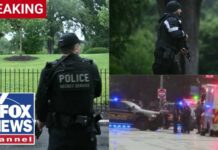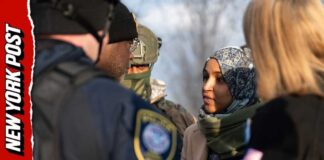


President Trump’s decision to deploy 300 National Guard troops to Chicago signals a dramatic escalation in efforts to restore law and order while igniting fierce debate over constitutional rights and federal overreach.
Story Highlights
- Trump authorized 300 National Guard troops to Chicago after violent clashes, aiming to support federal agents enforcing immigration law.
- Deployment has sparked riots and concerns over civil liberties, as federal and state forces intensify crackdowns in major cities.
- New Trump administration policies eliminate protections at “sensitive locations,” allowing ICE raids in schools and churches.
- Legal challenges mount as executive actions test constitutional boundaries and disrupt immigrant communities.
National Guard Deployment: Federal Action Meets Local Resistance
President Trump authorized the deployment of 300 National Guard troops to Chicago this weekend, a move intended to safeguard federal agents who are actively fighting crime and enforcing immigration law in the city. The response from local communities was immediate, with riots erupting as residents reacted against what they viewed as a heavy-handed crackdown. Federal agents now operate alongside National Guard personnel throughout Chicago, focusing on major urban areas that have historically struggled with violence and illegal immigration. This coordinated strategy reflects the administration’s broader commitment to enforcing federal law at the local level and addressing persistent unrest.
Trump’s Immigration Policies: Expanding Enforcement and Redefining Boundaries
Upon returning to office in 2025, President Trump swiftly implemented executive orders to reshape immigration enforcement nationwide. The administration eliminated previous restrictions on raids at “sensitive locations,” empowering Immigration and Customs Enforcement (ICE) agents to conduct arrests in schools, churches, hospitals, and other community centers. These changes, coupled with the deployment of the National Guard, have intensified the pressure on sanctuary cities like Chicago, where state and local officials are now compelled to cooperate with federal immigration authorities. The administration’s aggressive approach aims to reverse years of lenient immigration policies and restore public safety, but it has also triggered widespread concern among civil rights advocates and families.
Legal and Constitutional Challenges: Testing the Limits of Executive Power
The Trump administration’s actions have prompted a wave of legal challenges, with critics arguing that the use of military force and expanded federal authority threatens constitutional protections. Attorneys and advocacy groups have filed lawsuits questioning the legality of warrantless home entries by law enforcement officials and the elimination of due process for immigrants facing deportation. While supporters argue these measures are necessary to combat crime and uphold national sovereignty, opponents warn that such policies risk undermining individual liberties and eroding the foundation of American legal principles. The courts now face critical decisions on the scope of executive power in matters of immigration and public safety.
Impact on Communities: Disruption and Uncertainty Amid Mass Deportations
Mass deportation operations have led to significant disruptions in immigrant communities, particularly in urban centers like Chicago. Families are being separated, and many individuals face detention or removal without the opportunity for legal recourse. Reports indicate that ICE has used military aircraft to transport detainees, with some held in shackles during flights. The climate of fear and uncertainty is palpable among residents, as the rapid implementation of new policies has left many unsure of their rights and options. The administration claims these efforts are vital for restoring law and order, but the consequences for affected communities are profound and ongoing.
As federal and state forces continue to coordinate enforcement actions, the debate over immigration, constitutional rights, and federal authority remains front and center. President Trump’s deployment of the National Guard in Chicago is the latest flashpoint in a national conversation about how best to protect American communities while respecting the principles upon which the nation was founded. Conservative supporters see these steps as necessary corrections to past policies that fueled chaos and endangered public safety, while critics warn of lasting damage to civil liberties and the social fabric.
Sources:
Project 2025: What’s At Stake for Immigrants’ Rights
Immigration policy of the second Trump administration – Wikipedia
The Trump Administration’s 2025 Changes to Immigration Law …