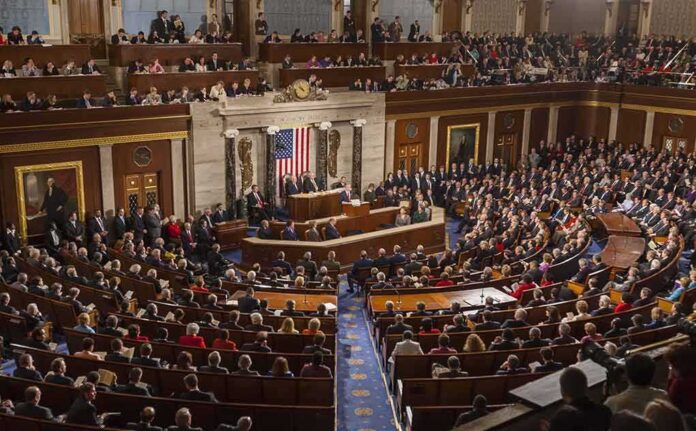
Texas Republicans want to make it harder to end a marriage, and the fight is already playing out in a Dallas courtroom.
Quick Take
- The Texas GOP’s 2026 platform calls for repealing “unilateral no-fault divorce” and adding a six-month waiting period.
- A Texas House bill, HB 3401, would delete the legal ground that lets most Texans divorce without proving blame.
- A Dallas man’s lawsuit claims the current no-fault law is unconstitutional, with a hearing set for February 2026.
- Family lawyers and advocates for domestic violence survivors warn the change could trap people in dangerous marriages.
Party Platform Sets Its Sights On No-Fault Divorce
The Republican Party of Texas approved a platform in July 2026 urging state lawmakers to “rescind unilateral no-fault divorce laws” and stretch the divorce timeline to six months after filing. This is not a new idea. The same language showed up in the party’s 2024 and 2022 platforms, showing it’s a long-term goal, not a one-time talking point.
Texas has allowed no-fault divorce since 1970 under a rule called “insupportability.” It lets a spouse end a marriage by simply saying it can’t be fixed, without blaming the other person for cruelty, adultery, or abandonment. Under House Bill 3401, filed in the state legislature, that rule would disappear. Anyone wanting a divorce would have to prove a specific fault in court.
What The Bill Would Actually Change
House Bill 3401 is short, just two pages, but its effects would run deep. It repeals Section 6.001 of the Texas Family Code, the exact line that has let Texans divorce without a fight for more than 50 years. Supporters say fault-based divorce protects marriage. Critics say it means more court battles, more legal bills, and more pain for people who just want out.
A similar repeal bill failed in 2025, meaning Texans can still get a no-fault divorce today. But the pressure hasn’t let up. Lawmakers in Oklahoma, Indiana, South Carolina, and South Dakota pushed similar bills in 2026, though no state has actually repealed no-fault divorce yet. Texas remains the biggest battleground in this fight.
A Lawsuit Adds A Legal Front
Outside the legislature, a Dallas County resident named Jeff Morgan filed a lawsuit in July 2025 arguing that Texas’s no-fault divorce law is unconstitutional. His case claims the law violates his rights in eleven different ways. A hearing on a motion to dismiss his case is scheduled for February 5, 2026. The case is still pending, and no court has ruled on whether the law will stand.
Why Domestic Violence Advocates Are Pushing Back
Natalie Nanasi, a law professor at Southern Methodist University who leads a legal center focused on crimes against women, calls no-fault divorce “a lifeline” for people escaping unsafe marriages. She says fault-based divorce is still legal in Texas today, but she rarely sees people actually use it. Proving fault in court often means reliving trauma in front of a judge.
A publication from Southern Methodist University’s law school argues that forcing people to prove fault “imposes financial burdens that trap victims in abusive relationships and increases the risk of harm and lethality”. The group says keeping no-fault divorce in place protects the safety of domestic violence victims. That warning sits at the center of the pushback against the GOP platform plank.
That's what could happen to marriage laws. 🤯
⠀
The Texas GOP platform calls to ABOLISH no-fault divorce. Nebraska's proposes RESTRICTING it for parents.
⠀
This is a MASSIVE setback for women, yet few are talking about it.
⠀
🚨 Here's why we must sound the alarm…— Lisa Schader, CPA (@MoneyFitMoms) August 29, 2026
Family lawyers note that Texas law already has tools for abuse survivors even without repealing no-fault divorce. Courts can waive the standard 60-day waiting period for abuse victims and can issue protective orders without a hearing when there’s a “clear and present danger”. Victims can also file for divorce on cruelty grounds right now if they choose. Whether those existing options are used enough, or would be enough if no-fault disappeared, is the real question dividing both sides.
A Debate That Cuts Across The Political Divide
Researchers don’t agree on whether ending no-fault divorce would even change divorce rates. Some older studies found short-term increases in divorce after states adopted no-fault laws, but newer research using more advanced statistical methods found no lasting effect at all. That uncertainty means neither side can claim the science is fully settled, even as the political fight over marriage and family law keeps intensifying in Texas and beyond.
Sources:
lifesitenews.com, texasgop.org, poliscore.us, texaspolicyresearch.com, thefederalist.com, marysadvocates.org, terryandrobertslaw.com, texags.com, capitol.texas.gov, draperfirm.com, relevantradio.com, music.amazon.com, listennotes.com
© ournationnews.com 2026. All rights reserved.