Pelosi’s refusal to condemn a Democrat’s violent rhetoric against a Republican raises questions of partisan bias.
Story Highlights
- Nancy Pelosi declined to call for Jay Jones to drop out despite his violent text messages.
- Jones’ texts, comparing a Republican to dictators, sparked outrage just before elections.
- Pelosi’s stance contrasts with her previous pressure on Biden to exit the race.
- The incident underscores ongoing issues with political violence rhetoric.
Pelosi’s Response to Violent Rhetoric
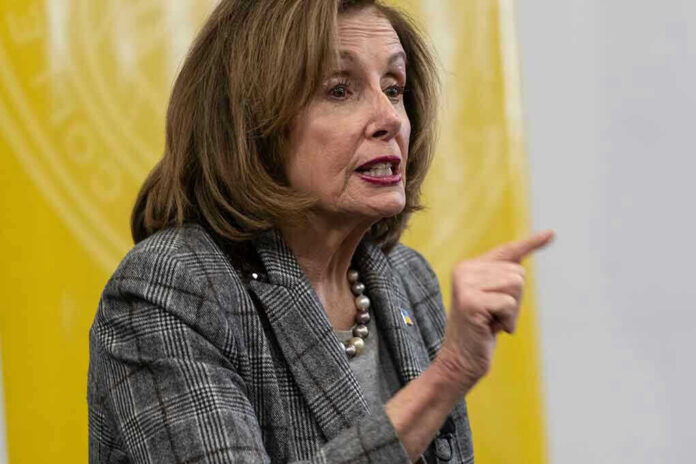
Former House Speaker Nancy Pelosi has come under scrutiny for her recent comments regarding Virginia Democratic attorney general candidate Jay Jones. Jones, who sent text messages in 2022 fantasizing about shooting Republican Todd Gilbert, remains in the race despite public backlash. Pelosi, asked in a CNN interview whether Jones should withdraw, stated that the decision lies with Virginia voters and Democratic leaders. This response has sparked criticism, especially given Pelosi’s past advocacy for President Biden to step aside in the 2024 presidential race.
Jones’ messages, which were leaked shortly before Virginia’s November 2025 elections, compared Gilbert to historical dictators, stating Gilbert should receive “two bullets to the head.” Despite this, Pelosi’s refusal to call for Jones’ withdrawal highlights a perceived inconsistency in her stance on political violence, an issue particularly sensitive given her husband’s 2022 attack. Republicans have seized upon this to criticize Democratic hypocrisy, while Democrats must weigh the implications of Jones’ continued candidacy.
Virginia’s Political Landscape
Virginia’s political scene is tense as the November elections approach, featuring races for governor and attorney general. Jay Jones, despite his controversial texts, continues to compete against Republican Jason Miyares. The gubernatorial race sees Republican Lt. Gov. Winsome Earle-Sears facing Democrat Abigail Spanberger. The leaked texts have intensified the stakes in an already high-profile election cycle, drawing national attention and scrutiny.
Democratic leaders in Virginia have expressed that, despite the controversy, Jones remains the preferable candidate for attorney general. This decision reflects a strategic calculation to retain the position, though it risks damaging the party’s credibility on addressing political violence. Pelosi’s noncommittal stance seems to reflect a broader challenge within the Democratic Party to manage internal rhetoric while criticizing similar behavior from opponents.
Implications of Political Violence Rhetoric
The controversy around Jay Jones’ texts and Pelosi’s response is part of a larger issue of escalating political violence and rhetoric. The Supreme Court’s ruling in Counterman v. Colorado has set a high bar for prosecuting threats, focusing on intent rather than language alone. This legal framework complicates efforts to address such rhetoric, as many threats fail to meet the threshold for criminal action.
The Democratic Party faces significant challenges in maintaining a consistent stance on political violence, particularly when it involves their members. Pelosi’s response to Jones, juxtaposed with her actions in other political arenas, may weaken the party’s messaging. As political violence becomes more normalized, the lack of consequences for such rhetoric could embolden similar behavior, raising concerns about the safety and civility of political discourse in the United States.
Sources:
Congressional Concerns on Threats and Political Violence
Pelosi’s Response to Virginia AG Candidate’s Violent Texts