
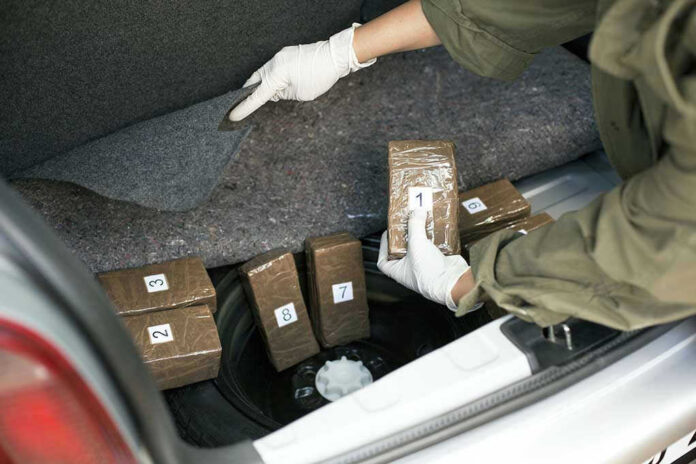
As cartels escalate high-tech trafficking right off America’s doorstep, El Salvador’s navy just sent a $35 million shockwave through criminal networks—showing what real border enforcement looks like.
Story Snapshot
- El Salvador’s navy seized 1.4 tons of cocaine floating 1,000 miles off its coast, disrupting cartel operations.
- The bust is part of President Bukele’s aggressive crackdown, with over 37 tons of cocaine seized since 2024.
- Central America’s Pacific corridor remains a key route for drugs heading north to the U.S.
- U.S. officials praise the operation as a major win for international cooperation and border security.
El Salvador’s Navy Targets Transnational Cartels Far Offshore
On September 9, 2025, El Salvador’s National Navy intercepted 1.4 tons of cocaine—valued at $35 million—floating nearly 1,000 miles southwest of the nation’s coastline. This operation, announced by President Nayib Bukele himself, is not just a local success but a strategic blow to the international cartels using Central America as a primary corridor for drug trafficking. By extending patrols deep into the Pacific, Salvadoran authorities are combating sophisticated smuggling tactics that threaten American communities and families.
The seized cocaine was discovered in the open ocean, not aboard a vessel, indicating traffickers’ increasing reliance on covert pickup strategies and floating caches. El Salvador’s navy has adapted rapidly, expanding its operational reach and deploying advanced surveillance to intercept these shipments. This record-setting haul is part of a broader campaign; since 2024, the country has seized over 37 tons of cocaine—an unprecedented increase reflecting both the scale of the problem and the effectiveness of intensified patrols. Such aggressive interdiction efforts signal to cartels that the days of easy passage through Central America are numbered.
International Cooperation Drives Results in the Pacific Corridor
Central America’s Pacific corridor has long been a favored route for international drug syndicates, with traffickers using boats, small planes, and “narco subs” to move cocaine northward. El Salvador’s coastline and estuaries serve as both entry and monitoring points. President Bukele’s administration, in partnership with U.S. authorities, has ramped up intelligence sharing and maritime patrols—key factors behind recent successes. The U.S. Embassy in El Salvador quickly commended the latest seizure, highlighting the importance of bilateral cooperation for defending borders and keeping dangerous drugs off American streets. This operation demonstrates how strong alliances and decisive action can counteract global criminal enterprises.
Recent policy shifts in the United States emphasize the necessity of strong border enforcement to protect constitutional rights and secure American communities. With President Trump’s administration prioritizing national security, crackdowns on international drug trafficking gain renewed urgency. El Salvador’s achievements underscore what’s possible when nations take border threats seriously—contrasting sharply with past years of lax enforcement, porous borders, and rising cartel influence. For many frustrated Americans, these results offer hope that principled leadership and international cooperation can reverse the tide of lawlessness.
Cartel Adaptation and Regional Security Challenges
Security analysts warn that traffickers continue to adapt, leveraging technology and new routes to evade law enforcement. The floating cocaine seizure reveals the lengths to which criminal organizations will go to exploit lapses in maritime security. Experts caution that as interdiction intensifies, cartels may seek even more creative or dangerous strategies, potentially putting coastal communities and law enforcement at risk. Nonetheless, the disruption of $35 million in cartel assets delivers an immediate financial and logistical setback, bolstering deterrence and sending a clear message: aggressive, coordinated enforcement works.
For coastal populations, these operations mean reduced exposure to drug-related violence and corruption, while the political rewards accrue to leaders willing to take bold, constitutional action. Maritime security investments are rising, with El Salvador’s navy operating at new levels of autonomy and effectiveness. As criminal organizations regroup, the challenge will be sustaining these gains and strengthening regional defense against evolving threats. Ultimately, Salvadoran and American interests are aligned—protecting families, upholding the rule of law, and preserving national sovereignty from transnational criminal influence.
Sources:
Bukele’s security administration strikes another major blow against drug trafficking
1.4 tons cocaine found floating in Pacific Ocean off El Salvador
Salvador seizes 1.4 tons of cocaine floating in the Pacific Ocean
El Salvador deals severe blow to international drug trafficking