
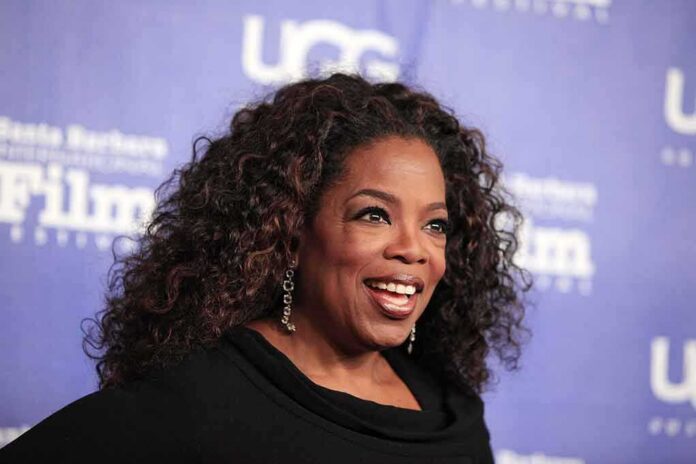
The loudest cheer in Oprah’s Massachusetts taping came when a doctor asked for “pink shirts and energy” for Black mothers, too—and that line cut to the heart of how America decides who gets compassion.
Story Snapshot
- Oprah’s podcast centered on the Lindsay Clancy case and postpartum psychosis, with experts and an audience in the room.
- A circulated clip quotes an obstetrician-gynecologist urging equal public passion for mothers of color in similar cases.
- The Harvard Law Journal note argues sympathy in these cases often follows race and class lines, not even rules.
- Oprah’s platform has featured Dr. Kameelah Phillips before on Black maternal care, confirming her role in this space.
What Oprah’s Episode Put On Stage
Oprah took her podcast to Massachusetts for a deep look at the Lindsay Clancy case and postpartum psychosis. The description says the episode includes medical experts, legal scholars, an audience, and an interview with Meg Hamp, a nurse who worked with Clancy for seven years and testified at trial. The platform framed the case as a national flashpoint. It put mental health, criminal responsibility, and public empathy side by side in one room. That is rare and powerful television-radi o crossover.
The show’s listing states Clancy strangled her three children. It notes the defense argued insanity by postpartum psychosis while prosecutors pressed first-degree murder. That framing matters because it highlights a clash Americans struggle with: when to see a crime as disease-driven and when to punish without pause. It also tells us why the conversation drew heat. People do not agree on what justice looks like when mental illness enters the story.
The “Pink Shirts and Energy” Flashpoint
A viral clip from the taping quotes an obstetrician-gynecologist saying, “I want us to have the same passion for people who don’t look like Lindsay… have the pink shirts and the energy for them as well.” The room applauded in response, according to that circulated segment. The phrase pointed at the visible support networks that often form around a white, educated defendant. It asked for equal attention when the mother is Black or poor, and the headlines are colder.
Oprah’s own media outlets have featured Dr. Kameelah Phillips on Black maternal health. That presence shows she is not a random guest pulled for a hot take. She is a physician who works this ground and speaks to this audience, which gives weight to her parity call even as viewers debate its scope. Still, without a full official transcript of the episode, the exact wording and lead-up sit inside a clip. That leaves context gaps for people trying to judge tone and timing.
Does Public Sympathy Track Race And Class?
A 2024 Harvard Law Journal student note argues that public support in postpartum psychosis cases is uneven. It says three Black mothers charged around the same period as Lindsay Clancy did not receive the same level of public support as Clancy. It concludes that media attention and sympathy often fall along race and class lines rather than even standards. That claim matches what many viewers heard in the Oprah clip and what some news features have explored since the trial drew national focus.
⚖️💔✨𝙊𝙥𝙧𝙖𝙝 𝙬𝙖𝙣𝙩𝙨 𝙩𝙝𝙚 𝙇𝙞𝙣𝙙𝙨𝙖𝙮 𝘾𝙡𝙖𝙣𝙘𝙮 𝙚𝙣𝙙𝙞𝙣𝙜 𝙛𝙤𝙧 𝙚𝙫𝙚𝙧𝙮𝙤𝙣𝙚.
Murder trials should not be social media pressure campaigns.
Killer mommies should be tried on the evidence —and intent at the time of the crime.
This is Oprah from her Clancy… pic.twitter.com/9zcUK3ndtc
— Tosca Austen (@ToscaAusten) September 11, 2026
A Yahoo News analysis quoted criminologist Danielle Slakoff, who said women of color who commit crimes are portrayed more often as bad people or bad mothers. She contrasted that with white women more often framed as pulled by forces outside their control. That difference in framing can tilt public reaction from “get her help” to “lock her up.” Supporters quoted in the same piece called the outpouring for Clancy selective, which sharpened the fairness question.
What Common Sense Conservatives Can Agree On
Equal standards for justice and mercy are not a left or right idea; they are an American one. If a community rallies with pink shirts for one mother, it should be ready to show up for another mother facing the same illness and the same horror. That does not mean overlooking crime. It means judging cases on facts and mental state, not skin tone or zip code. A level field protects victims, respects due process, and preserves trust in the system.
Where The Record Is Strong—and Thin
Oprah’s episode exists and centers the Clancy case with experts and audience. That is on the record. The “pink shirts and energy” line appears in a circulated clip, which is evidence of a moment but not a full transcript. The broader claim about a sympathy gap has scholarly backing in the Harvard note and reporting that tracks different portrayals by race. What remains thin is a matched media audit across cases with clear counts and tone coding. That is the next step for proof, not a reason to shrug off the concern.
What To Watch Next
Producers can release a full transcript to settle questions about quotes and applause lines. Researchers can compare similar cases across race and class with story counts, language, and imagery. Faith groups and civic clubs can build the same support kits—meals, rides, court-day care—for any family hit by a postpartum mental health crisis. Lawmakers can invest in screening and fast-track care so help arrives before tragedy. Those moves honor empathy without excusing evil.
Sources:
transcripts.cnn.com, oprah.com, youtube.com, lindsayclancyarchive.online, podcasts.apple.com
© ournationnews.com 2026. All rights reserved.