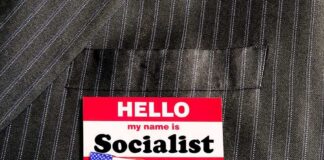

A campaign that calls itself the party of truth just got caught mislabeling its own candidate as a war veteran, and quietly paying a Detroit pastor tens of thousands of dollars before he sang the candidate’s praises on the radio.
Quick Take
- A dark-money publication backing Michigan Senate candidate Abdul El-Sayed falsely called him a “veteran,” though he never served in the military.
- The group blamed the error on a headline and comma mistake, according to reporting from Just the News.
- The Washington Free Beacon reported El-Sayed’s campaign paid a Detroit pastor’s nonprofit $82,500 for “strategic consulting” while the pastor hosted a clergy event for him.
- El-Sayed’s campaign has pushed back hard on Republican attack ads, calling them misleading and accusing critics of trying to paint him as less American.
A Dark-Money Outlet Calls Him A Veteran He Never Was
Just the News reported that a publication called the Michigan Independent, tied to the American Independent Foundation, described El-Sayed as a “veteran” in a piece announcing his Senate bid. The same reporting notes he has never served in the military at all. Foundation president Joe Conason chalked it up to a headline mix-up and a stray comma, not intentional deception.
Whether it started as a typo or not, the error landed in front of voters exactly when El-Sayed needed every advantage he could get. Dark-money groups exist to shape perception, not correct it after the fact. A mistake that flatters your candidate right before a primary deserves more scrutiny than a shrug and a comma excuse.
Pay For Pray: The Pastor, The Payment, And The Silence
The Washington Free Beacon broke the story that El-Sayed’s campaign quietly paid $82,500 to a nonprofit run by Horace Sheffield, a prominent Detroit pastor, for “strategic consulting.” Around the same time, Sheffield hosted El-Sayed at a clergy round table meant to shore up support among Black voters, who had been slow to warm to the candidate.
Sheffield praised El-Sayed on the radio, saying “Lord help this man win,” without mentioning he had been collecting campaign money through his nonprofit. Buying access to a pulpit is not new in politics. But dressing a paid arrangement up as an organic faith endorsement, without telling the audience about the money, crosses from strategy into manipulation. Voters deserve to know when praise has a price tag attached.
The Campaign Fires Back At Its Critics
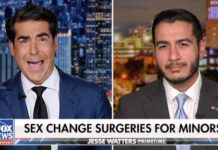
El-Sayed’s team has not stayed quiet. When outside groups ran ads claiming he disrespects women, his campaign called the spots “misleading and offensive”. When Republicans resurfaced old podcast comments, his campaign said the clips were cherry-picked and did not reflect his current views, pointing instead to his high school football days and Fourth of July fireworks.
El-Sayed has also argued that opponents invoking his full name and his faith are trying “to insinuate that somehow I’m less American,” a charge he made directly to CNN. Those responses matter. But they answer accusations about his image, not the specific facts about the veteran mislabeling or the undisclosed pastor payments, which stand on their own regardless of how the campaign frames its critics.
A Familiar Pattern In Modern Campaign Warfare
None of this happens in a vacuum. Research on political advertising has found that more than half of Facebook pages running political ads during a recent stretch hid who was actually paying for them, a pattern researchers called a wave of deceptive messaging. Campaigns and their allied nonprofits have learned that ambiguity pays, at least until reporters or filings force the money trail into daylight.
A commentary from PJ Media went further, arguing the El-Sayed campaign’s tactics echo old Soviet-style propaganda, where friendly outlets launder a preferred narrative while payments and coordination stay hidden from view. That comparison is sharp, but the underlying facts, a false veteran label and an undisclosed pastor payment, are exactly the kind of details voters should demand campaigns explain plainly, not spin away.
Sources:
pjmedia.com, freebeacon.com, freebeacon.substack.com, nypost.com, en.wikipedia.org, currentaffairs.org, washingtonexaminer.com
© ournationnews.com 2026. All rights reserved.