ournationnews.com — A two-minute introduction at a jobs event turned a new NFL quarterback into a national Rorschach test for politics, free speech, and team loyalty.
Story Snapshot
- Jaxson Dart introduced Donald Trump at a New York event; cameras rolled and the sports world pounced [1][2].
- A teammate’s instant social-media jab signaled real, if brief, locker-room friction [1].
- Television panels spun the moment into a proxy fight over athlete speech and team cohesion [3][5].
- Claims that Dart “endorsed” policy outpace the on-record facts of a ceremonial intro [1][2].
The on-camera spark that lit a week of sports talk
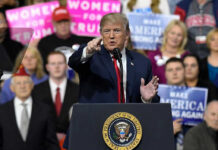
Jaxson Dart appeared on stage in Suffern, New York, on May 22, 2026, to introduce President Donald Trump at a “Fighting For American Workers” event, a moment documented in photo-captioned reporting and rapidly packaged by national sports media [1][2]. The footage and stills gave critics a clean, replayable artifact, which matters in today’s discourse economy. The content did not show Dart stumping policy or launching attacks; the available reporting stresses that distinction while acknowledging the obvious symbolism of standing next to Trump [1][2].
Abdul Carter, a Giants linebacker, posted a blunt, dismissive reaction that read like a teammate’s eye-roll turned public: “Thought this was AI. What we doing, man?” [1]. That post established the controversy as more than just media chatter. Cable shows and debate desks then elevated the clip and the comment into a day-one storyline, turning a discrete public act into a referendum on whether athletes should dabble in politics at all and whether doing so fractures a locker room [1][3][5].
What the record shows versus what the narratives sell
OutKick’s coverage concedes two separate truths: Dart exercised off-hours speech and also triggered a distraction risk inside a team workplace, a classic tension in professional sports [2]. The same reporting states, “We don’t know Dart’s political beliefs” and says he did not advocate policy from the stage, which undercuts claims that he mounted a campaign-style endorsement [1]. That gap between the public artifact and the thick narrative layered on top of it is where much of the outrage industry operates.
On the other end, television personalities framed the moment as fair game for critique while recognizing Dart’s right to be public. Jemele Hill captured that posture directly: freedom to speak invites scrutiny to follow [5]. That stance aligns with common sense and the First Amendment’s culture: you may speak, and others may answer. The question for a team is narrower and more practical—does speech hinder the job?
The locker-room question that actually matters
The strongest documented friction remains Carter’s public jab, followed by reports on national shows that he quickly signaled peace with Dart, saying “me and JD6 are good,” which softens the claim of enduring internal division [3][5]. No source in the provided record shows team discipline, missed practices, performance slippage, or sponsor fallout directly tied to the incident [1][2][3][5]. The absence of those markers does not prove harmony, but it argues against the apocalyptic predictions that debate segments sometimes prefer.
‘The View’ attacks NFL star Jaxson Dart for supporting President Trump | The Right Squadhttps://t.co/9wKFDy1Utb
— ConspiracyDailyUpdat (@conspiracydup) May 27, 2026
Fans and pundits reached for old comparisons, most notably to protests made by other players in recent years, but the cited reporting pushes back on false equivalences and urges judging each case on its narrow facts: an introduction versus an organized campaign, a one-off appearance versus sustained activism, a teammate’s fleeting post versus a team schism [2]. That granular approach tracks with conservative principles of individual responsibility and proportionality—assess the act that happened, not the storyline we wish had happened.
What fairness looks like going forward
Media outlets should show viewers the exact wording of Dart’s remarks alongside the timeline of teammate reactions. If the debate is about locker-room standards, teams can publish clear expectations that apply neutrally to all causes and candidates. If the debate is about politics in sports, critics should disclose the rule they want enforced and whether it applies when the politician changes. A consistent, fact-anchored standard defuses culture-war inflation and restores the focus to performance, accountability, and equal treatment [1][2][3][5].
Sources:
[1] YouTube – ‘The View’ attacks NFL star Jaxson Dart for supporting President Trump …
[2] Web – Jaxon Dart faces more backlash for introducing Trump than …
[3] Web – Stop comparing Jaxson Dart’s New York Trump rally …
[5] YouTube – The Jaxson Dart Situation is Getting Crazy…
© ournationnews.com 2026. All rights reserved.