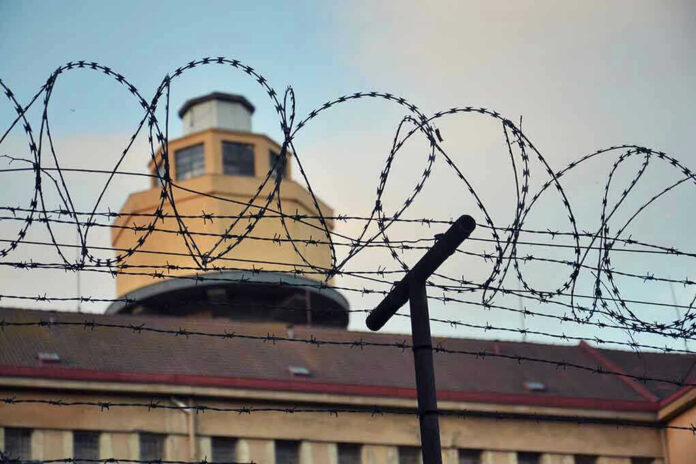
A female Tennessee prison warden has been arrested on an allegation of raping a male inmate—another black eye for a corrections system already stained by staff-on-inmate abuse and cover-ups.
Story Snapshot
- Arrest of Johnesha Rucker spotlights ongoing staff-on-inmate abuse problems in Tennessee corrections [5]
- Officials have not released charging documents, victim identity, or forensic details, limiting public scrutiny
- Prior Tennessee cases include officer convictions for obstructing sexual abuse probes and lawsuits over officer rapes [5][2][3]
- Lack of transparency risks deepening public distrust while due process remains essential
Arrest Raises Urgent Questions About Oversight and Evidence
Authorities arrested Tennessee prison warden Johnesha Rucker on a charge that she raped an inmate in a men’s lockup, according to initial news reporting on May 14, 2026. Officials have not released a probable cause affidavit, victim identity, date of the alleged incident, or any forensic details. Without those records, the public cannot evaluate the basic elements of the allegation or the strength of the evidence that led to Rucker’s arrest. The case now moves into the courts for proof and accountability.
State and local agencies commonly cite privacy laws when withholding early-stage sexual assault records, but persistent gaps in transparency erode trust—especially in systems with prior scandals. In Tennessee, the United States Department of Justice documented a conviction of a corrections officer who obstructed an investigation into allegations that he sexually abused an inmate, underscoring real risks of internal interference when abuse is alleged [5]. Public confidence hinges on fast, factual disclosures that protect victims while enabling oversight.
Pattern of Staff Misconduct in Tennessee Corrections
Recent Tennessee history features a troubling mix of criminal cases, civil lawsuits, and administrative actions involving staff sexual misconduct against inmates. Court filings and local reporting describe incidents where jail officers allegedly raped and impregnated female inmates, prompting litigation and settlements that brought taxpayer costs and institutional embarrassment [2][3]. This backdrop makes any new allegation—especially one involving a warden—land with heavier weight, because the pattern signals systemic vulnerabilities rather than isolated misdeeds.
Beyond lawsuits, federal prosecutors have demonstrated a willingness to pursue obstruction and related crimes when officials undermine sexual abuse probes behind bars. The Department of Justice case against a Tennessee corrections officer who obstructed a sexual abuse investigation confirmed that misconduct can extend from the initial offense to the investigative aftermath, compounding harm to victims and the integrity of the justice system [5]. That history should motivate rapid, independent fact-finding and clear communication in Rucker’s case to prevent any repeat of institutional stonewalling.
Due Process, Victim Protection, and What Accountability Should Look Like
Conservatives expect two things at once: the presumption of innocence for the accused and zero tolerance for government officials who exploit their power. Prisons are closed environments where inmates rely on staff for safety, medical access, and due process. If investigators possess medical exams, video, logs, or other corroboration, prosecutors should preserve chain-of-custody and disclose materials through proper legal channels. If evidence is thin, courts should say so quickly, because prolonged ambiguity punishes both the accused and potential victims.
Accountability must include documented timelines, independent review, and real consequences for proven abuse. Tennessee’s prior cases show how cover-ups magnify damage, while civil settlements rarely fix root causes [2][3][5]. The Department of Correction and the Tennessee Bureau of Investigation should secure records, preserve surveillance, and release nonidentifying summaries that confirm investigative steps without exposing victims. Swift, transparent action protects inmates’ rights, respects taxpayers, and reinforces that public service is a trust, not a shield against the law.
Sources:
[2] Web – Officer at southern Tennessee jail raped, impregnated …
[3] Web – Lawsuit: Tennessee jail officer raped, impregnated inmate
[5] Web – Tennessee Corrections Officer Convicted of Obstructing …