
When bombs start flying and the diplomats start pleading, you learn fast who still believes words can stop missiles.
Story Snapshot
- U.S. and Israel launched “Operation Epic Fury” early Saturday, February 28, 2026, striking multiple Iranian nuclear and missile-related sites across several cities.
- Iran retaliated quickly with strikes on U.S. bases in Qatar, Kuwait, the UAE, and Bahrain, raising the odds of a wider regional war.
- European leaders largely urged restraint, negotiations, and UN engagement, while still describing Iran’s nuclear and ballistic programs as a serious threat.
- The split exposed a familiar transatlantic pattern: Europe pushes process; Washington and Jerusalem prioritize stopping capability.
Operation Epic Fury turned a diplomatic argument into a live-fire test
Early Saturday, February 28, 2026, the United States and Israel struck Iranian targets in a coordinated campaign labeled “Operation Epic Fury.” Reports described hits across Tehran and other locations including Qom, Karaj, Kermanshah, Tabriz, and a major nuclear facility near Isfahan. President Trump framed the operation as “massive and ongoing” and tied his justification to Iran’s post-1979 record and the collapse of nuclear diplomacy after years of threats and stalled talks.
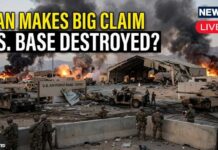
Iran’s response arrived fast enough to answer the biggest question critics of military action always ask: will it deter or ignite? Tehran retaliated with strikes on U.S. bases in Qatar, Kuwait, the UAE, and Bahrain, and Iran’s foreign minister promised a forceful response. That matters because it shifts the crisis from a distant “surgical” operation to an immediate force-protection problem for U.S. troops and partner nations that didn’t vote for this weekend’s escalation.
Europe’s official script: condemn Iran, reject escalation, demand negotiations
Europe’s top-line reaction followed a consistent formula. Leaders and EU officials described Iran’s nuclear and ballistic programs as dangerous, pointed to sanctions already imposed, and urged restraint to prevent spillover. Ursula von der Leyen emphasized de-escalation and international law. Emmanuel Macron called for urgent engagement at the UN Security Council. The UK, France, and Germany coordinated messaging, stressing they were in close contact while urging negotiation rather than endorsing the strikes.
Spain’s prime minister, Pedro Sánchez, went further by rejecting unilateral action outright, a stance that signals something European voters understand instinctively: wars have a way of becoming everyone’s problem, especially with energy prices and migration pressures nearby. Russia and China condemned the operation, predictably, but their statements still add weight at the UN and amplify the argument that U.S. force, not Iranian enrichment, is the destabilizing act. That framing will dominate many international rooms.
The real transatlantic divide: risk tolerance and time horizons
The U.S.-Israel case rests on a blunt premise: negotiations did not stop Iran’s nuclear progress, so delaying action only raises the eventual cost. Conservatives tend to recognize that deterrence collapses when red lines become suggestions. Europe’s approach rests on a different premise: the act of striking, even for a stated defensive purpose, can trigger wider conflict that becomes unmanageable. Both premises can be true; the argument is over which risk is larger right now.
European leaders also carry institutional muscle memory from the JCPOA era. The 2015 deal and the U.S. withdrawal in 2018 left Europe investing political capital in process, inspection regimes, and sanctions as the alternative to war. That habit makes “return to talks” the safest public demand even when leaders privately admit Iran’s capabilities keep advancing. Voters hear “restraint” as morality; governments often mean “contain the blast radius before it hits our economies.”
Iran’s retaliation forces a harder question: what does success look like?
Iran striking U.S. bases in the Gulf turns strategy into arithmetic: how many days can the campaign continue, and how many partners will absorb the consequences? Trump promised an ongoing campaign, which implies sustained operations and sustained Iranian attempts to impose costs. Limited data remains available on casualties and damage, but the political impact is immediate: Gulf states hosting U.S. forces now sit in the crosshairs, and every additional exchange increases the odds of miscalculation.
Common sense says diplomacy cannot function when one side uses talks to buy time and the other uses restraint to avoid blame. The strongest European statements acknowledged Iran’s programs as a serious threat while still demanding de-escalation. That contradiction isn’t hypocrisy; it’s the central dilemma of the Iran file. Sanctions can punish and isolate, but they rarely erase technical knowledge. Military strikes can degrade facilities, but they rarely erase motive. The next move must answer both.
What to watch next: UN theater, allied cohesion, and energy shock signals
The near-term battlefield includes the UN as much as the skies. Calls for Security Council involvement will accelerate, partly to create off-ramps, partly to assign guilt. The E3 and EU will try to hold a line that condemns Iran’s threats while resisting endorsement of unilateral force. Meanwhile, Washington will test whether partners value alliance credibility over diplomatic optics. Energy markets will read every Gulf launch and every shipping headline as a warning flare.
Adults who’ve watched decades of Middle East crises know the pattern: leaders promise “proportionality,” then events set the proportions. If Iran expands retaliatory strikes or activates regional proxies, Europe’s demand for restraint may turn into pressure on Washington rather than Tehran, because Europe can’t command Iran but it can nag the U.S. That’s not strength; it’s leverage by proximity. The open question is whether leverage can still matter once “talk” stops.
European Leaders Speak Out on Iran Strikes, but the Time for Talk Is Overhttps://t.co/gMe8mNde80
— RedState (@RedState) February 28, 2026
American conservatives should judge the moment with two tests: does action reduce the threat to American lives, and does it strengthen deterrence rather than advertise hesitation? The facts so far show Iran retaliated, meaning the threat environment worsened before it improves. That doesn’t prove the strikes were wrong, but it proves the cost is real. Europe’s pleas may sound moral; Washington’s resolve may sound cold. History tends to reward the side that proves consequences are unavoidable.
Sources:
How world leaders are reacting to U.S.-Israel strikes on Iran
Iran War: World Leaders Reaction, Russia, China, Europe
World leaders split over military action as U.S., Israel strike Iran in coordinated operation
Europe reacts to US and Israeli attack on Iran as military operation spills into wider region