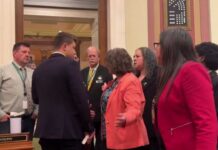
A Democratic lawmaker’s shocking blunder during a high-profile hearing reignites outrage over political insensitivity and the consequences of soft-on-crime policies undermining public trust and safety.
Story Snapshot
- Democrat Rep. Deborah Ross publicly apologized after confusing murder victims’ names in front of a grieving father.
- The incident occurred amid national debate about violent crime, public safety, and political accountability.
- Victims’ families and the Charlotte community face renewed trauma as politicians are scrutinized for insensitivity and policy failures.
- The gaffe intensified calls for policy change and highlighted the erosion of trust in elected officials.
Democrat Lawmaker’s Public Error Deepens Political Tensions
On September 29, 2025, North Carolina’s Democratic Rep. Deborah Ross mistakenly confused the names of two murder victims while speaking at a public hearing, committing the error directly in front of one victim’s grieving father. The incident unfolded against the highly charged backdrop of the Iryna Zarutska murder case and ongoing national debate over violent crime, public safety, and the accountability of political leaders. Ross’s misstatement immediately triggered public backlash and calls for greater empathy and attention to victims’ families.
The context of the hearing amplified the emotional toll. The murder of Iryna Zarutska, a Ukrainian national killed on Charlotte’s Lynx Blue Line in August 2025, had already become a political flashpoint. Media coverage and intense commentary from both conservative and mainstream outlets pointed to a pattern of perceived incompetence and insensitivity among elected officials, particularly those associated with “soft-on-crime” policies. As Ross issued her apology, critics argued this latest misstep reflected a deeper disregard for families’ pain and the real-world impact of failed public safety policies.
National Debate Over Crime Policy and Political Accountability
The high-profile nature of Zarutska’s murder, combined with the public blunder, placed renewed scrutiny on policies believed to enable rising violent crime. Conservative commentators and local leaders blamed lax enforcement and progressive criminal justice reforms for creating an environment where tragedies like Zarutska’s become political fodder. The House Judiciary Committee’s field hearing in Charlotte, scheduled in direct response to these incidents, underscored a growing demand for policy solutions centered on law and order, with President Trump and Vice President JD Vance joining the chorus for reform.
This politicization extended beyond North Carolina. Other recent high-profile killings, such as the murder of conservative commentator Charlie Kirk in Utah, have driven further polarization and anxiety about public safety. The cumulative effect has been a nationwide call for leaders who prioritize the safety of law-abiding families and respect for victims—values many feel have been sidelined by previous administrations and leftist agendas.
Emotional Fallout for Victims’ Families and the Community
The direct impact of Ross’s mistake on the victims’ families cannot be understated. For those mourning loved ones, public recognition and dignity are essential. The confusion of names in such a charged setting intensified the trauma, highlighting the disconnect between political rhetoric and the lived experiences of crime victims. Community members voiced concerns that the focus on public gaffes distracts from real accountability and substantive reform. Many called for renewed respect for the rule of law and for leaders to put families, not political agendas, first.
The Charlotte community, already shaken by the murder, now confronts renewed fears about public safety and a perceived lack of seriousness from some political figures. As conservative voices call for stronger protections and the restoration of traditional values, the incident serves as a stark reminder of what is at stake in the ongoing debate over crime, justice, and American families’ security.
Political and Policy Consequences Moving Forward
In the wake of this incident, lawmakers and advocacy groups are pushing for changes in how public officials prepare for and participate in sensitive hearings. The increased scrutiny on elected leaders—especially regarding public statements about crime—signals a shift toward greater accountability. The ongoing investigation into Zarutska’s murder and the Judiciary Committee’s focus on transit safety reflect a broader trend: Americans are demanding tangible results and leaders who uphold constitutional values and public trust.
Short-term, the fallout from Ross’s error includes heightened calls for empathy, accuracy, and the prioritization of victims’ rights. Long-term, the incident may influence legislative agendas and electoral outcomes, as voters seek representatives who embody competence, compassion, and respect for traditional American principles.
Sources:
Daily Caller: Report on Rep. Ross’s apology and the incident.
ABC News: Context on political violence and threats following high-profile murders.
Wikipedia: Detailed account of Iryna Zarutska’s murder and subsequent political fallout.
AOL News: Additional reporting on Rep. Ross’s apology.