
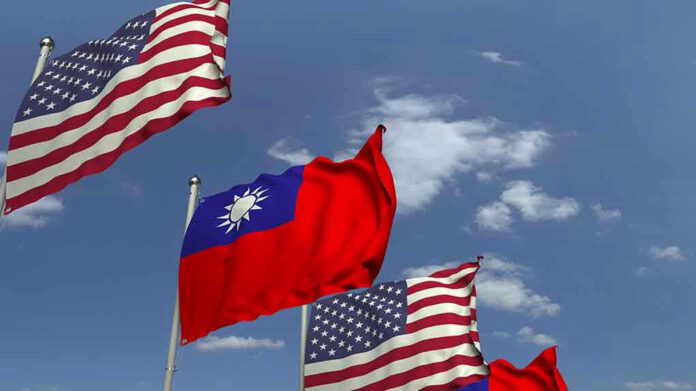
President Trump is demanding a $1 billion defense aid package for Taiwan amid rising tensions with China, igniting a fierce debate over U.S. foreign policy priorities.
At a Glance
- Trump administration pushes for $1 billion in Taiwan defense aid, highlighting the need for deterrence against China.
- House passed a $500 million aid package, but the Senate has yet to act.
- Debate intensifies over U.S. foreign aid spending and Taiwan’s defense responsibilities.
- Potential escalation in U.S.-China relations as Beijing condemns U.S. involvement.
The Trump Administration’s Stance
The Trump administration has formally requested Congress to increase Taiwan’s defense aid to $1 billion, a move seen as a strategic necessity to counter China’s growing military presence in the region. This bold request comes amid ongoing tensions and Beijing’s aggressive posturing towards Taiwan. Trump’s push for increased aid reflects a commitment to bolster Taiwan’s defenses, ensuring the island nation can deter Chinese aggression effectively.
The Office of Management and Budget (OMB) has emphasized the critical nature of the proposed aid. According to the OMB, the $500 million currently included in the House-passed bill is simply not enough to ensure credible deterrence in the Indo-Pacific and safeguard U.S. personnel. The administration’s stance is clear: robust support for Taiwan is essential to avoid a potential conflict in the region.
Congressional Debate and Divisions
The request for increased funding has sparked significant debate within Congress. While the House has passed a $500 million aid package, the figure falls short of the administration’s demand. Some lawmakers, particularly fiscal conservatives like Rep. Marjorie Taylor Greene, express concerns over increasing foreign aid, fearing it may lead to greater Taiwanese dependency on the U.S. and exacerbate fiscal challenges.
On the other side of the aisle, Democrats such as Rep. Betty McCollum argue that the aid is a necessary measure to counter the looming threat from China. The debate underscores the broader tensions within Congress over foreign policy priorities and fiscal responsibility, highlighting the complex dynamics of U.S.-Taiwan relations.
Implications for U.S.-China Relations
The proposed increase in aid to Taiwan is likely to provoke a strong response from China, further straining already tense U.S.-China relations. Beijing has consistently viewed U.S. military support for Taiwan as interference in its internal affairs, and any increase in aid is expected to trigger diplomatic protests and potential retaliatory measures.
The situation raises significant concerns about the stability of the Indo-Pacific region. As the U.S. navigates these complex geopolitical waters, the necessity of maintaining a balance between deterrence and diplomatic engagement becomes increasingly apparent. The outcome of this aid proposal will have far-reaching consequences for regional security dynamics and U.S.-China relations moving forward.
Taiwan’s Strategic Role and Future
Taiwan’s strategic importance cannot be overstated. As a leading global semiconductor manufacturer, Taiwan plays a crucial role in the global supply chain, making its security a priority not just for the U.S., but for the international community. The island nation’s defense posture is under intense scrutiny, with increased pressure to enhance its own military capabilities in response to the growing power imbalance with China.
While President Trump has urged Taiwan to significantly boost its defense spending, the domestic political landscape in Taiwan presents challenges. Nonetheless, the island’s government remains committed to securing U.S. support and ensuring its sovereignty against potential Chinese aggression. The unfolding situation will continue to test Taiwan’s resilience and its strategic alliances.